
Last updated: November 2026. By Mia Sgarlato, founder of Pet Passport Club
Taking a dog to Australia from the US is the most complicated pet move we handle, and it's not close. Nothing about it is secret. Australia publishes every rule. The problem is that the rules stack on top of each other, run on overlapping clocks, and leave almost no room for a typo.
Most people who get it wrong aren't careless. They followed the steps in the wrong order, or trusted a document that looked fine and wasn't. One small error can add months, or stop the move entirely.
Short version: From the US, plan on at least 7 months. Your dog needs an ISO microchip, a rabies vaccine, a rabies titer test at an approved lab, an import permit, a set of tests and treatments in the last 45 days, a USDA-endorsed health certificate, and a cargo flight into Melbourne. Then at least 10 days in government quarantine at Mickleham. There's no way around the quarantine.
How the Australia Pet Import Process Works for US Dogs
The US sits in Australia's Group 3 list of approved countries (some newer government pages call it Category 3). That's the strictest group that's still allowed in. The official version lives in the department's step-by-step guide for Group 3 dogs, and every step below is drawn from it and from the USDA's US to Australia pet travel page.
Two ground rules before you start taking your dog to Australia. Every procedure has to be done by a USDA-accredited vet, and the order matters as much as the steps themselves. Also, check that your breed isn't on Australia's prohibited list before you spend a dollar.
Step 1: ISO microchip
The chip has to be ISO compliant (generally 10 or 15 digits), and numbers starting with 999 aren't accepted. Your vet should scan it at every single visit. Australia's guide is blunt: if the chip can't be read or the number is wrong on any document, the dog can't be imported.
Step 2: Identity verification (technically optional, practically not)
This is the step that decides whether your dog does 10 days in quarantine or 30. Two different accredited vets at two different clinics each scan the chip and photograph the scanner with the dog, and each submits a declaration through USDA's online system. Then a final Part 3 declaration has to be endorsed by USDA within 3 months of the first scan. It has to be done before the titer blood draw, and not at the same visit.
Our identity verification breakdown post covers this in more detail, because it's where a lot of files quietly fall apart.
Step 3: Rabies vaccine and the RNATT
Your dog needs a current rabies vaccine (given at 12 weeks or older) that stays valid from the blood test all the way to export. After a first-ever rabies shot, wait 3-4 weeks before the blood draw.
The RNATT (rabies neutralizing antibody titer test, done as a FAVN or RFFIT) has to be run by a lab Australia approves, and the result needs to be 0.5 IU/ml or higher. The sample is valid for 12 months. A government vet then completes the RNATT declaration, and the microchip number, result and sample date have to match the lab report exactly.
Here's the big one: your dog can't leave until at least 180 days after the lab receives the sample. Australia says there are no exceptions.
Step 4: Import permit through BICON
You apply for the permit in BICON, Australia's import system, with the lab report and the RNATT declaration attached. Most permits come back in 20-40 business days, but the department says some take up to 123. Current permit fees are A$626 for the first dog and A$299 for each additional animal on the same application, non-refundable.
Step 5: Book quarantine at Mickleham
There's one government quarantine facility for cats and dogs, in Mickleham outside Melbourne. You can only book once your permit is granted, and the department says to do it as soon as it is, because a permit doesn't guarantee a space. Reservations are reviewed within 7 days.
The published quarantine fees for one dog doing 10 days add up fast:
Reservation charge: A$269 (non-refundable)
Importation charge: A$1,078 (non-refundable)
Accommodation: A$53 a day, so A$530 for 10 days or A$1,590 for 30
Extras like inspections, document checks or out-of-hours pickup billed on top
That puts the government side (permit plus a 10-day stay) around A$2,500 for one dog before vet bills, USDA fees and the flight.
The Last 45 Days Before Your Dog Flies to Australia
Once the 180 days are nearly up, a second clock starts. Everything here counts back from the export date, and the day of treatment is day 0.
Leishmania: quantitative IFAT or ELISA test within 45 days of export. Snap tests don't count.
Brucella canis: only for intact dogs, within 45 days, using RSAT, TAT or IFAT. Other test types get rejected.
Leptospirosis: either a 2-dose vaccine course with the last dose between 12 months and 14 days before export, or a negative test within 45 days.
Canine influenza: required for US dogs, with the primary course finished at least 14 days before export.
External parasites: a product that kills ticks and fleas on contact, started at least 30 days before export and kept up per the label.
Internal parasites: two treatments within 45 days, at least 14 days apart, with the second within 5 days of export.
Then comes the final exam within 5 days of export, and the USDA endorsement of the health certificate and lab reports in the same window. The certificate travels with your dog as an original with every declaration and report.
Flying into Melbourne as cargo
Your dog has to land directly at Melbourne International Airport, as manifested cargo in an IATA-approved crate. No in-cabin option, no domestic connection inside Australia. Transit stops elsewhere are allowed under conditions, and flights have to land within the facility's operating hours. If you're new to cargo, our guide to airline and cargo policies is a good primer.
A Timeline for Taking Your Dog to Australia
Here's how the steps line up in practice. Australia counts the late-stage windows from the export date, which for most US routes is the day before your dog lands.
Swipe to see more →
| Time before arrival | Step |
|---|---|
| 8+ months | Check breed eligibility, ISO microchip, start identity verification Parts 1 and 2 at two clinics |
| 7-8 months | USDA endorses Part 3 (within 3 months of first scan), rabies vaccine if needed, RNATT blood draw |
| 6-7 months | Lab result back, RNATT declaration endorsed, apply for import permit in BICON |
| As soon as permit is granted | Book Mickleham quarantine and confirm flights |
| 180 days after lab receipt | Earliest possible export date |
| 30+ days | Start external parasite treatment |
| Within 45 days | Leishmania, Brucella (if intact), lepto test if not vaccinated, first internal parasite treatment |
| 14+ days | Canine influenza and lepto vaccines completed |
| Within 5 days | Second internal parasite treatment, final vet exam, USDA endorsement |
| Arrival | Manifest cargo into Melbourne, then 10+ days at Mickleham |
If you take one thing from the table, it's that the first three rows decide your departure date. Everything after that is just execution.
Why the Australia Pet Import Process Trips People Up
None of these are exotic mistakes. We see the same handful over and over.
The 180-day clock starts at lab receipt, not the blood draw. A sample that sits in a vet's fridge or gets stuck in shipping pushes your whole move back.
Microchip numbers have to match everywhere. One transposed digit on a lab report is a hard stop, and Australia won't accept a report that's been amended after the fact. The usual fix is a new blood draw and a new 180 days.
Identity verification paperwork never got USDA endorsed. Parts 1 and 2 done, Part 3 missed or past the 3-month deadline, and suddenly you're looking at 30 days of quarantine instead of 10.
Quarantine is full when you finally try to book. Mickleham space isn't guaranteed, and people who wait until the last month can lose their dates.
A connecting cargo leg has an embargo. Heat and cold embargoes can kill a route you were counting on. Our post on winter cargo embargoes by destination explains how these work.
The vet has never done an Australia file. Plenty of great vets haven't, and Australia's rules leave no room for learning on the job.
A recent client's three golden retrievers had a titer report come back with the wrong microchip number, which meant redoing it, and their identity verification paperwork needed some careful salvaging before it would hold up.
If any of that list made your stomach drop, that's sort of the point of our Full-Service tier. Australia is the most complex destination we handle, so we run the whole file: the order of steps, the vet coordination, the USDA endorsements, the permit, the quarantine booking and the flight. Full-Service starts at US$2,500, separate from those government fees, and you can see what's included on our services page.
How to Avoid Pet Quarantine in Australia (Honest Answer)
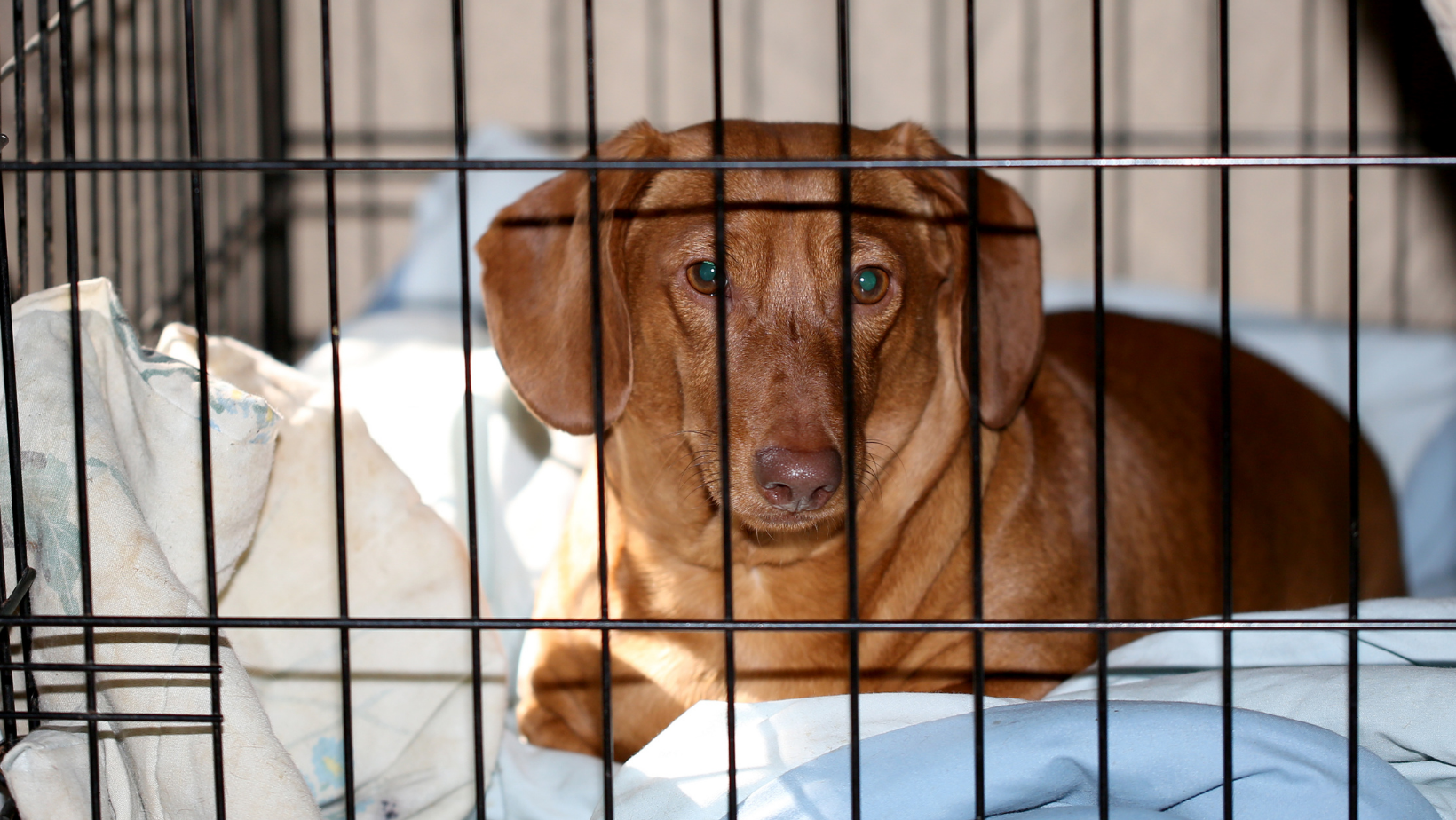
You can't, not from the US. Dogs from Group 3 countries go to Mickleham for at least 10 days, and there's no home quarantine option.
What you can avoid is a longer stay or a rejected dog. Skip or botch identity verification and it's at least 30 days. Get a permit condition wrong and Australia can order more quarantine, more testing, re-export or worse, all at the owner's cost. So the honest answer to how to avoid pet quarantine in Australia is: get the paperwork right the first time, so 10 days stays 10 days.
Taking a Dog to Australia: Common Questions
-
Realistically 7 months or more. The 180-day wait after the lab receives the titer sample is the floor, and identity verification, the vaccine and the permit all happen before that clock even helps you.
-
No. Bringing a dog to Australia means manifested cargo directly into Melbourne, in an IATA-approved crate.
-
Government fees alone run about A$2,500 for one dog with a 10-day quarantine stay (permit plus Mickleham charges). Vet work, USDA endorsements, the crate and the cargo flight are extra and often cost more than the fees.
-
It depends on the mistake. A wrong microchip number can mean starting the titer and the 180 days over, and a missed identity verification step means 30 days of quarantine instead of 10.
-
Australia recommends one but doesn't require it. Some airlines only accept pets on Australia routes through an agent, so check before you book anything yourself.
Getting Your Dog to Australia Without the Rework
The Australia process isn't hard because any single step is hard. It's hard because there are a lot of them, they depend on each other, and nobody tells you which mistake costs six months until you've made it.
If you're early in planning your dog's move to Australia, a 1-hour consult call is a good way to get the order right before you book a single vet appointment. If you'd rather hand the whole thing off, that's what Full-Service is for.
The paperwork is the hardest part. We've got it covered.
Mia + Poppy
