
Flying With Dogs Internationally: Airline & Cargo Policies (2026)
Last updated: September 2026. By Mia Sgarlato, founder of Pet Passport Club
Most people planning an international move with a dog start with the country's entry rules. But that's backwards.
The country will let your dog in if the paperwork's right. The airline is the one that decides whether your dog gets on the plane at all, and in 2026 the answer depends almost entirely on how much your dog weighs.
Short version: Flying dogs internationally from the US comes down to three things. If your dog is under about 17 to 22 pounds with the carrier, they can fly in the cabin on most airlines for $100 to $200. Bigger than that, the US major airlines won't take your dog in the hold anymore (military and Foreign Service excepted), so you're booking a foreign carrier that still accepts checked pets, or shipping as manifest cargo for $500 to $3,000 and up. Snub-nosed breeds, summer heat, and the UK each close doors of their own.
Who this is for: This is for US pet owners flying a dog or cat abroad who want to know which airline to book before they book anything else.
The 3 Ways a Dog Can Fly Internationally
Every airline sorts pets into the same three buckets, and the bucket decides your price, your paperwork, and your stress level.
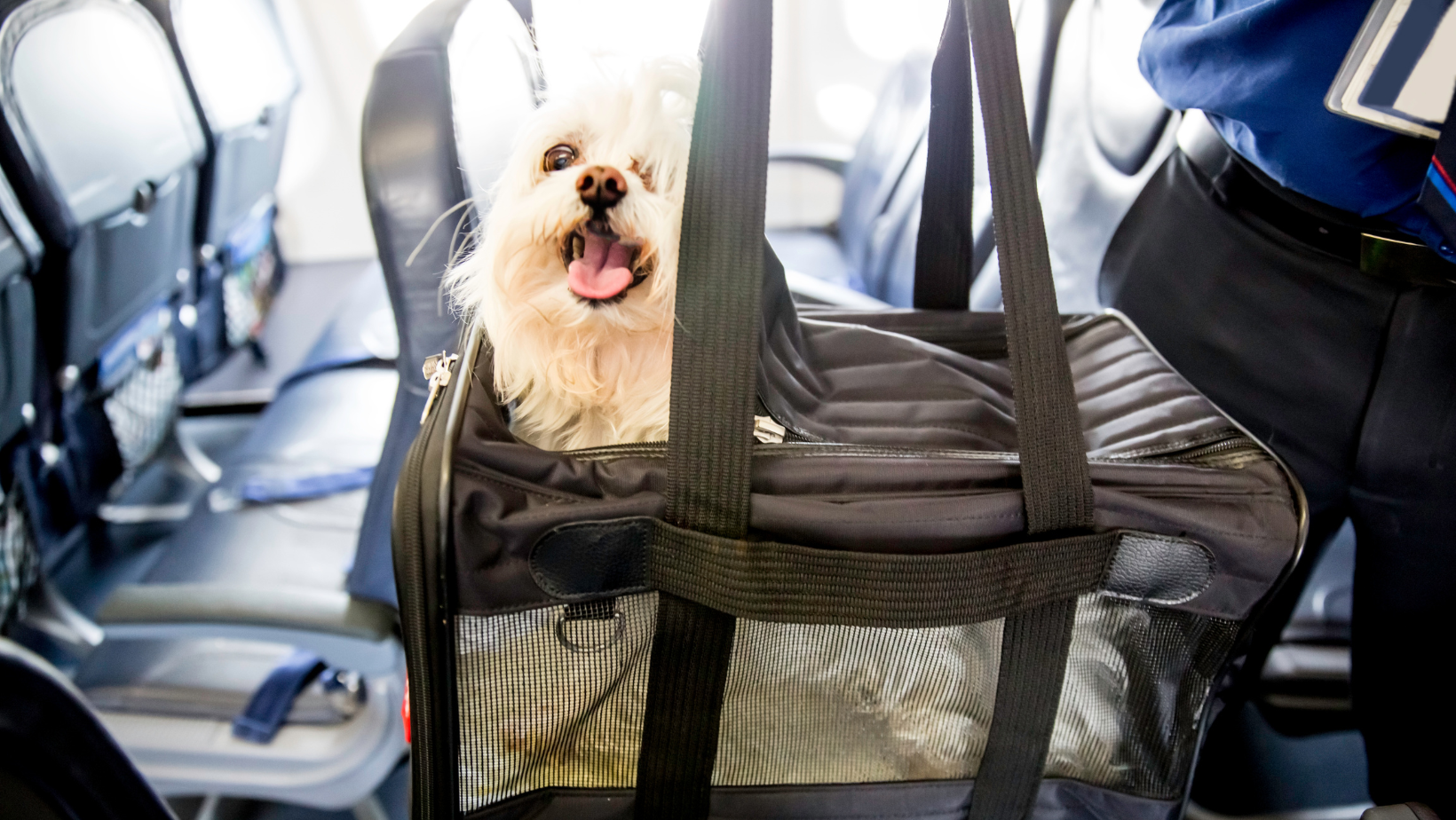
In the cabin. Your dog rides in a soft carrier under the seat in front of you. Cheapest, calmest, and the only option Poppy has ever used. Limited to small dogs and cats.
Checked baggage (the hold). Your dog flies on your ticket, in a hard crate, in the pressurized, climate-controlled compartment under the cabin. You check the crate like a suitcase and collect it at baggage claim.
Manifest cargo. Your dog flies as freight, booked through the airline's cargo division, often on a different flight than yours. It's the most expensive option and the only one some countries and airlines allow.
In-cabin is a size question. The other two are an airline question. The reason this post exists is that the answer to the airline question changed for Americans in the last two years.
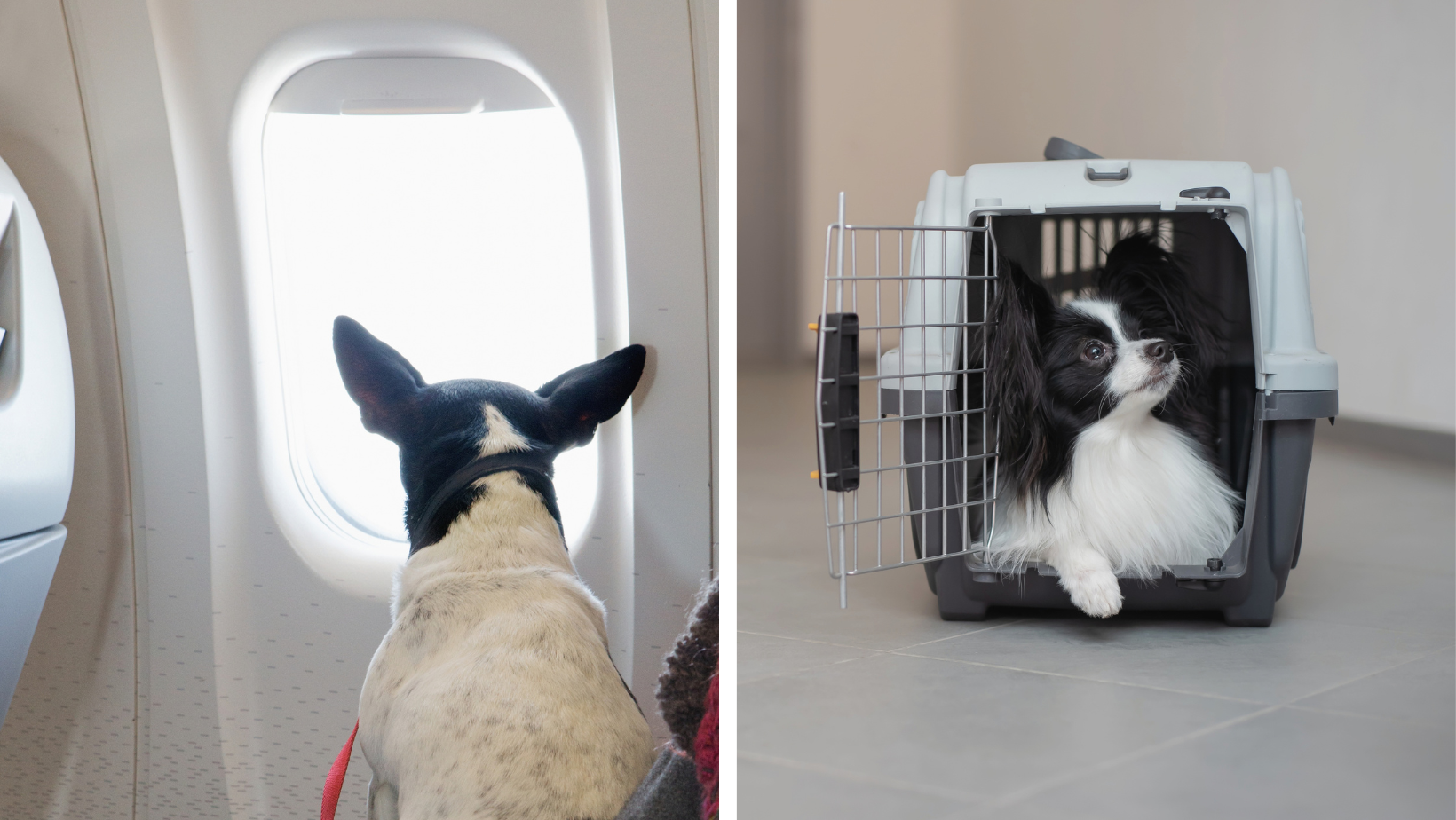
Which Airlines Fly Dogs in the Cabin Internationally
Nearly every airline takes small pets in the cabin, but the weight ceilings vary more than people expect, and a few big carriers don't allow it at all on long-haul routes.
Two things jump out of that table. First, the European carriers cap at 8 kilograms including the carrier, so a 16-pound dog in a 2-pound bag doesn't make it. Second, American won't put a cabin pet on a flight across either ocean, so a US-to-Europe trip on American means your dog goes another way.
The number that matters is your dog plus the carrier on a bathroom scale. Poppy is a miniature dachshund and she clears the 8 kg bar with room to spare, which is the only reason our summer 2026 flight to Europe was a $100 problem and not a $2,000 one.
If you're not sure whether your dog clears the bar, or which carrier fits which aircraft, this is the part of the plan I'd rather you get right before you buy a non-refundable fare. A consult call sorts it in an hour.
Flying With a Large Dog Internationally: Who Still Takes Them
Here's the change that catches Americans off guard. United, Delta, and American no longer accept pets in the hold or as cargo for the general public. All three now limit that service to active-duty military and State Department Foreign Service personnel on official orders. If your dog is over cabin size, your US airline is out.
That leaves two paths.
Foreign airlines that still accept dogs as checked baggage from the US
These carriers let a crated dog fly on your ticket, in the hold, on the same plane as you:
Air Canada: up to 100 lb (45 kg) combined with the crate. Not to Australia, NZ, Hawaii, UK-adjacent islands, or on the 737 MAX 8.
KLM and Air France: up to about 165 lb (75 kg) combined. Fees run roughly 70 to 500 euros one way depending on route.
Lufthansa: up to 70 lb (32 kg) combined as checked baggage; heavier dogs go through Lufthansa Cargo. Fees from the US run about $100 to $400.
Alaska Airlines: up to 150 lb combined, $200 each way, but only to Canada, Mexico, Costa Rica, and Belize.
Turkish, Qatar, Singapore: checked options exist with route-specific limits and fees in the $250 to $400 range.
For a Europe move, this is why so many of my clients end up on KLM through Amsterdam or Lufthansa through Frankfurt even when a US carrier has a nonstop. The nonstop can't carry the dog.
Manifest cargo for the biggest dogs and the strictest countries
Cargo is booked through the airline's freight arm (Lufthansa Cargo, Air France KLM Martinair Cargo, Qatar Airways Cargo, Emirates SkyCargo, Air Canada's AC Animals). Your dog flies in the same pressurized hold, but on a cargo airway bill, and you or an agent drop the crate at the cargo terminal instead of the check-in counter.
You'll use cargo when:
Your dog and crate exceed the checked baggage limit
The destination requires it (the UK accepts pets only as manifest cargo, and Australia does too)
The airline bans your breed in the hold but allows it in temperature-controlled cargo
You're not on the flight, or the route has no passenger option
Expect $500 to $3,000 and up for the freight alone, plus the crate, plus the vet work. Lufthansa's Frankfurt Animal Lounge is the reason I steer big-dog Europe moves there: dogs on a long connection get an individual run, water, and a keeper on duty around the clock.
This is where PPC does the most work. We price out the checked-versus-cargo options, book the cargo airway bill, and line up ground transport on both ends, while your dog stays in your custody until the crate goes through the door. Our Full-Service Concierge tier is built for exactly this kind of move.
The Crate Rules That Get Dogs Denied at Check-In
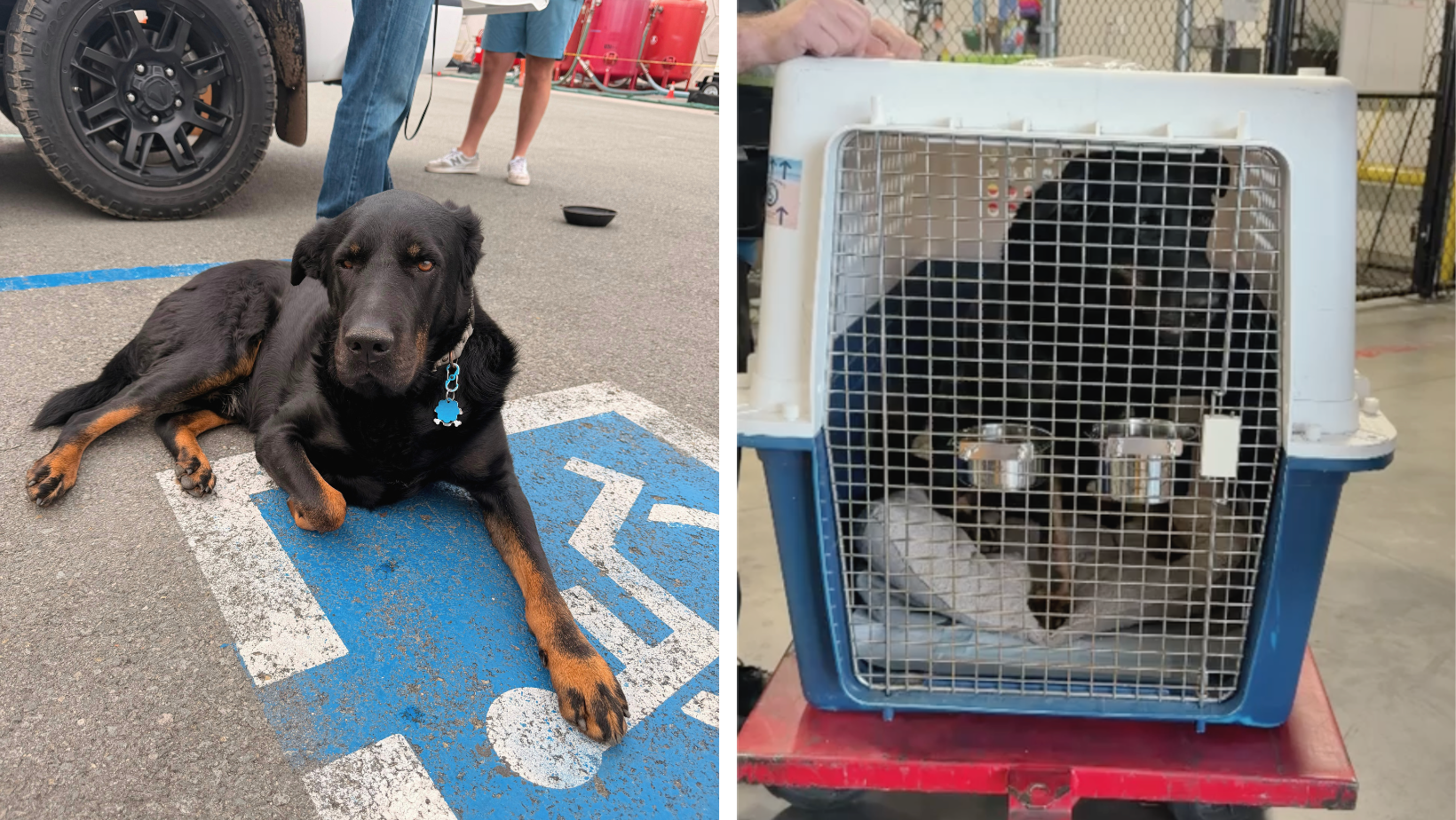
If your dog flies in the hold or as cargo, the crate is inspected before the dog is. IATA's Live Animals Regulations set the standard every airline copies, and the failures are boringly consistent.
Hard-sided, with metal hardware. Plastic clips holding the two halves together are the number one rejection. Bring nuts and bolts.
Big enough to stand, turn, and lie down. The airline measures your dog standing, adds a few inches above the ears and past the nose, and expects the crate to match. Most owners buy one size too small.
Ventilation on at least three sides, four for some destinations.
Two empty dishes attached to the door, plus a bag of food taped to the top.
Absorbent bedding only. No blankets, no toys, nothing your dog could chew.
Live Animal stickers and your contact info on the outside.
Snub-nosed breeds add another layer. Lufthansa, KLM, Air France, Alaska, and Delta all ban brachycephalic dogs from the hold outright; some allow them in temperature-controlled cargo with a larger crate. If you have a Frenchie, bulldog, pug, or Boston terrier over cabin weight, expect the route to be built around the breed, not the destination.
Heat Embargoes and Other Reasons the Airline Says No
Airline policies are written for a normal day. Embargoes are what happen on a hot one.
Temperature. Most carriers won't load a pet if any airport on the route is forecast above 85°F or below 45°F. Alaska allows no heat exception at all. American blocks hold pets through Phoenix, Tucson, Las Vegas, and Palm Springs from May through September. Summer moves through the Sun Belt need an early morning or late night departure, or a different hub.
Aircraft type. Some planes have no climate-controlled hold. Air Canada's 737 MAX 8 is the common one. A schedule change that swaps your aircraft can cancel your dog's booking.
Country rules. The UK requires manifest cargo for every non-assistance pet. Australia has the same rule plus quarantine.
Capacity. Airlines cap cabin pets per flight, usually 4 to 8. The seat sells; the pet spot has to be requested separately and confirmed, typically 48 to 72 hours ahead at minimum.
US re-entry. Coming home, every dog needs a CDC Dog Import Form receipt, a microchip, and to be at least 6 months old. Dogs returning from screwworm-affected countries like Mexico also need a screwworm freedom certificate.
Confirm the pet reservation in writing, then confirm it again a week out. The single most common horror story I hear isn't a denied entry at the border. It's a dog who lost their spot when a flight was rebooked and nobody re-added the pet.
How to Choose an Airline for Your Dog in Six Steps
Weigh your dog in the carrier. Under 8 kg opens every cabin door. Under 20 lb opens the US carriers. Over that, skip to step three.
Check the breed. Snub-nosed and over cabin size means cargo-only or a rethink. Sort this before you look at routes.
Pick the carrier before the route. For big dogs to Europe, that's usually KLM, Air France, Lufthansa, or Air Canada. For Latin America, Alaska, Copa, Aeromexico, or Avianca. For the UK and Australia, cargo, full stop.
Build the route around embargoes. Avoid summer connections through the desert hubs and winter connections through the northern ones.
Match the crate to the airline's chart, not the pet store's label. Buy it early so your dog can sleep in it for a month.
Book the pet spot the same day you book the seat, then get the confirmation number in writing.
Timing wise, this fits the same lead-time rule I give for paperwork: easy destinations like the EU need 2 to 3 months, and hard ones like Australia or the UK need 6 months to a year. The airline booking is one of the first things you do inside that window, not the last.
Common Mistakes When Flying Dogs Internationally
Booking the flight first and the dog second. Pet spots sell out and some fares can't be changed. Call the airline before you pay.
Assuming your US airline will take a big dog. They won't, unless you're on military orders. This surprises people every single week.
Weighing the dog without the carrier. The limit is the combination. A 15-pound dog in a 3-pound bag misses Lufthansa's cutoff.
Buying the crate the week before. A dog who's never slept in the crate has a much rougher flight, and a crate that fails inspection means no flight at all.
Ignoring the connection. A one-stop through Frankfurt in July is fine. The same stop through Dallas in July might trigger an embargo.
Skipping the return plan. The CDC form, the six-month age rule, and the screwworm certificate are all things people discover on the way home.
If you've read this far and realized your trip has two or three of these problems stacked on top of each other, that's normal, and it's the whole reason a concierge exists. Our Co-Pilot tier handles the airline coordination while you handle the packing
Flying with Dogs Internationally FAQ
-
Yes, if your dog and carrier together stay under the airline's limit. That's 8 kg (17.6 lb) on most European carriers, 10 kg on Air Canada, 20 lb on American, and "fits under the seat" on United and Delta. American, British Airways, Emirates, and Qatar don't allow cabin pets on long-haul flights at all.
-
For checked baggage in the hold: Air Canada, KLM, Air France, Lufthansa, and Alaska (Alaska only to Canada, Mexico, Central America). For manifest cargo: Lufthansa Cargo, Air France KLM Cargo, Qatar Airways Cargo, Emirates SkyCargo, and Air Canada Cargo. United, Delta, and American don't fly pets in the hold for the general public.
-
In the cabin, $100 to $200 each way plus paperwork. As checked baggage, roughly $100 to $500 each way depending on airline and route. As manifest cargo, $500 to $3,000 and up for the freight alone. Vet visits, USDA endorsement, and the crate are all extra.
-
No. Great Britain requires every non-assistance pet to arrive as manifest cargo on an approved route. That applies even to a five-pound Chihuahua.
-
In the cabin, yes, if they're small enough. In the hold, most airlines say no. Some accept brachycephalic breeds in temperature-controlled cargo with a larger crate and a summer cutoff around 80°F.
-
The airline refuses to load the pet, and you rebook. Plan summer flights for early morning or late evening, and avoid connections through hot hubs. Alaska and American publish hard cutoffs at 85°F with no exceptions for heat.
-
The hold used for cargo is the same pressurized, climate-controlled compartment used for checked pets. The risk points are heat on the tarmac, long connections, and brachycephalic breeds, which is why the route and the season matter more than the word "cargo."
Ready to fly?
The airline is the gatekeeper on an international move with a dog, and in 2026 the gate has moved. Small dogs have more options than ever. Big dogs have fewer, and the ones that remain reward people who book the carrier first and build everything else around it. Map that early and the rest of the trip is paperwork.
Your next adventure starts with the right paperwork. Let's get it sorted.
— Mia + Poppy
