
Airline Heat Embargoes for Pets: Summer Rules by Destination
Last updated: September 2026. By Mia Sgarlato, founder of Pet Passport Club
You can have the crate, the health certificate, the endorsement, and a confirmed pet travel reservation, and still get turned away at the counter because it's 88 degrees in Dallas. That's an airline heat embargo, and every summer it catches pet owners who did everything else right.
Short answer: Most airlines won't load a dog or cat into the hold if the forecast at any airport on the route is above 85°F (about 29°C), and there's no vet letter that overrides heat. On top of that, some carriers block entire hubs for the season: American won't move hold pets through Phoenix, Las Vegas, Tucson, or Palm Springs from May 1 to September 30. Cabin pets are almost never affected. If your dog flies in the hold or as cargo, summer is about picking the route and the departure time, not the airline.
Who this is for: This is for anyone flying a pet in the hold or as cargo between May and September, whether it's a move to Europe or a summer in Mexico.
What Temperatures Can Dogs Not Fly At?
The number almost everyone uses is 85°F on the hot end and 45°F on the cold end. It comes from USDA's Animal Welfare Act regulations, which say animals in transit shouldn't sit in temperatures outside that range for more than four hours, or more than 45 minutes during loading and unloading. Airlines turned that guidance into a hard forecast check.
Here's how the check actually works:
The airline looks at the forecast for every airport on your itinerary: origin, connection, and destination. One hot stop kills the whole booking.
Above the cutoff, the pet doesn't fly. The threshold is 85°F at Alaska, American, Delta, and Hawaiian, measured at the forecast high for any airport on the itinerary.
There's no heat exception. Acclimation certificates from your vet only work on the cold side, usually down to 20°F. Alaska says it plainly: no exception for heat.
Snub-nosed breeds get a lower bar, around 75°F to 80°F, on the few airlines that still take them in the hold at all.
The cabin is a different world. A pet under the seat is in the same air-conditioned space you are, so heat embargoes don't apply. Poppy has flown in July with zero temperature paperwork because she never leaves the cabin. This whole post is about pets who do.
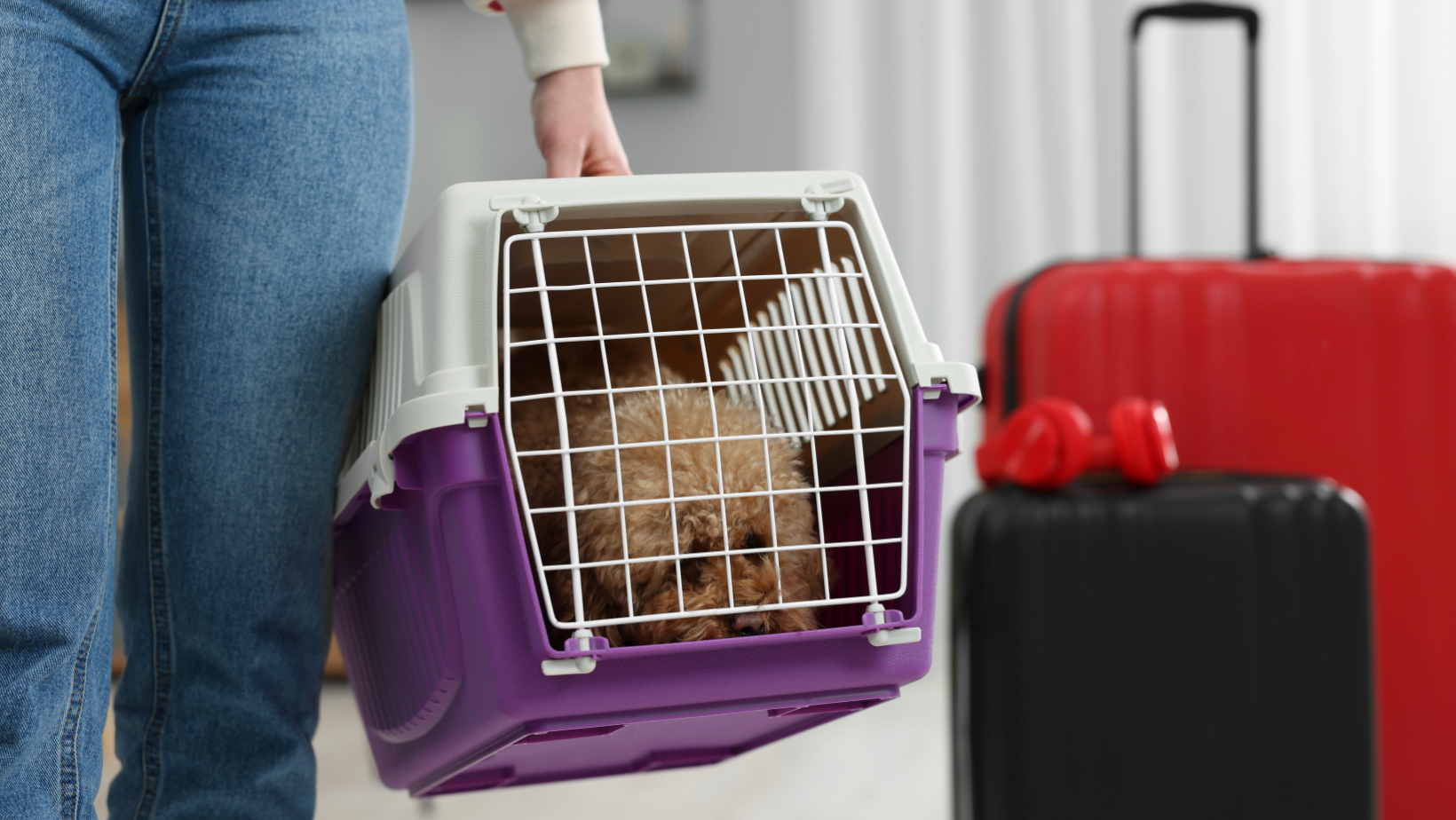
Which US Airports Have Summer Pet Embargoes?
The forecast rule catches individual days. Hub embargoes take entire cities off the table for months, no matter what the weather does on your travel day.
The takeaway is that the Southwest is closed to hold pets all summer on American, and every other carrier is a day-by-day forecast call. A dog leaving Phoenix in June has to drive to a cooler airport or wait until October.
One rule that beats every table, including this one: call the airline and confirm the embargo before you book. Embargo policies change often, sometimes mid-season, and airlines don't always publish the update online. A phone call with the pet desk, and a note of who you spoke to and when, is the only version of the policy that counts on travel day.
Summer Heat Embargoes by Destination
Where you're going changes which end of the trip is the problem. Sometimes it's the US departure. Sometimes it's the connection. Sometimes it's the destination itself.
Mexico, Central America, and the Caribbean
This is the hardest region in summer because both ends are hot. A Houston-to-Cancún flight in July can fail the forecast check at both airports. Alaska Airlines still flies hold pets to Mexico, Costa Rica, and Belize for the general public, and Aeromexico accepts pets in the hold up to 45 kg, but Aeromexico's heat cutoff is 35°C (95°F), which sounds generous until you check Mérida in August.
One catch: if your ticket is issued by Delta, Delta's May 15 to September 15 checked-pet block applies to the Aeromexico-operated flight too. Copa, out of Panama, moves pets on weekdays only because vet staff aren't on hand at weekends.
The practical fix is an early morning departure from a northern gateway and a nonstop, so the crate is never on a tarmac at 2 p.m. If your dog is small enough for the cabin, none of this applies, which is one more reason the cabin is worth fighting for on a Mexico trip. Our Mexico guide covers the full entry process, and the Costa Rica guide does the same for that route.
Europe
Europe is easier than people expect. Frankfurt, Amsterdam, and Paris rarely hit 85°F in the morning, and the big three European carriers (Lufthansa, KLM, Air France) don't publish a blanket summer embargo for regular breeds. The problem is the US side. A hold pet leaving Dallas, Houston, Atlanta, or Miami in July is at the mercy of the same forecast rule.
Lufthansa is the one to watch for snub-nosed dogs: brachycephalic breeds only move through Lufthansa Cargo when temperatures at departure and destination stay under about 80°F (27°C), and the airline restricts them further from June through August. For everyone else, the Frankfurt Animal Lounge is a good place to have a long connection in summer, because dogs wait indoors in individual runs rather than in a warehouse.
The Gulf and Asia via Doha or Dubai
Qatar Airways and Emirates only carry pets as cargo, and both ban brachycephalic breeds from cargo outright. Neither publishes fixed summer embargo dates, but Doha and Dubai sit above 100°F for most of the summer, so connections there are handled entirely indoors through the airlines' animal facilities. The risk isn't the Gulf stop. It's your US departure airport and the final destination's tarmac. Ask the cargo desk directly for the summer handling plan before you book.
Hawaii and Australia
Both get planned six months to a year out anyway, so the summer window is easy to design around. Hawaii takes pets in the cabin and the hold, and for hold pets, Hawaiian Airlines' April 15 to October 15 checked-pet embargo out of Phoenix, Las Vegas, Sacramento, and San Jose means Los Angeles, San Francisco, Seattle, or Portland is the standard summer departure.
For Australia, your pet flies as manifest cargo and lands in the southern hemisphere's winter, so the heat risk is entirely on the US end. Departures from LAX or SFO at night sidestep most of it.
How to Fly a Dog in the Summer Without Getting Bumped: 7 Steps
Yes, you can fly a dog in the summer. You just can't wing it. Here's the order I plan a summer hold booking in:
Confirm your dog's breed is allowed in the hold at all. Snub-nosed breeds over cabin size are a cargo-only conversation, and in summer, often a "wait until October" conversation.
Pick the departure airport by climate, not convenience. Seattle, Portland, San Francisco, Boston, and Chicago clear 85°F far less often than anything in Texas, Arizona, or Florida.
Book the first flight of the morning or a red-eye. The forecast check uses the temperature around departure and arrival, and 6 a.m. beats 3 p.m. by 15 degrees almost everywhere.
Fly nonstop if it exists. Every connection is another airport that has to pass the forecast check and another hour on a cart.
Skip the desert hubs entirely. Phoenix, Las Vegas, Palm Springs, and Tucson are off-limits on American through September and risky on everyone else.
Call the airline and confirm the embargo, then call again a week out. Policies change often and aren't always posted online, so the website is a starting point, not the answer.
Have a Plan B date. Embargoes are called the day before or the morning of. A refundable fare or a flexible arrival date turns a crisis into an inconvenience.
Getting this sequence right is most of what I do for summer moves. If you'd rather hand it off, our Co-Pilot Concierge tier builds the route, books the hold or cargo, and handles the rebooking if a heat call comes in.
Common Heat Embargo Mistakes
Checking only the departure city. The connection is where most summer bookings die. A Chicago-to-Amsterdam dog routed through Dallas fails on the Dallas leg.
Assuming a vet letter fixes it. Acclimation certificates only lower the cold limit. No airline accepts one for heat.
Booking the cheap afternoon fare. The morning flight costs more and is the only one that reliably clears the check in July.
Forgetting the destination's climate. Cancún, Doha, and Phoenix are hot in the morning too. Check both ends.
Trusting the website over the phone. Embargo rules change frequently and the online policy page lags. Call the airline, confirm the current embargo, and confirm the pet reservation again the day before, asking specifically about the temperature forecast.
Airline Heat Embargo FAQ
-
Most airlines refuse hold and cargo pets when the forecast at any airport on the route is above 85°F (29°C). Snub-nosed breeds are usually cut off around 75°F to 80°F. Cabin pets aren't affected.
-
Yes. Cabin pets fly year-round with no temperature rules. Hold and cargo pets can fly in summer if every airport on the route is forecast under the airline's cutoff, which usually means an early morning nonstop from a cooler city.
-
American blocks hold pets through Phoenix, Las Vegas, Tucson, and Palm Springs from May 1 to September 30. Delta accepts no checked pets from May 15 to September 15, on Aeromexico-operated flights too. Hawaiian accepts no checked pets to or from Phoenix, Las Vegas, Sacramento, or San Jose from April 15 to October 15. Alaska, Air Canada, and most foreign carriers use a day-by-day forecast check instead of fixed dates.
-
No. Cabin pets sit in the air-conditioned passenger compartment and aren't subject to temperature limits. Heat embargoes apply to pets in the hold and to manifest cargo.
-
No. Acclimation certificates only apply to cold weather, typically letting a pet fly between 20°F and 45°F. There's no heat equivalent on any major airline.
-
The pet booking is cancelled and you rebook for a cooler day or an earlier flight. Your own ticket is unaffected, which is why a flexible fare or a backup date matters more in summer than any other time of year.
Final Notes on Heat Embargoes for Pets
Heat embargoes feel random because the call comes late, but the rules behind them are fixed: 85 degrees, every airport, no exceptions. Plan the route and the clock around that, confirm it all with the airline by phone, and summer becomes just another travel month. For the bigger picture on who flies pets in the hold at all in 2026, start with the airline and cargo policy guide.
Questions? We're a DM or consult call away.
— Mia + Poppy
