
Last updated: November 2026. By Mia Sgarlato, founder of Pet Passport Club
Picking between dog-friendly cities in Italy is a good problem to have, because honestly, most of them are incredibly welcoming to pups. Dogs go into cafés, ride the bus, and get more compliments than you do. The real question isn't whether your dog is welcome. It's which city makes daily life easy for the two of you.
That comes down to boring stuff: how far the nearest patch of grass is, whether your dog can ride the metro, and how many stairs stand between you and dinner. Poppy and I did Rome and Florence together. She's even been to Vatican City, though only outside. Dogs don't go into the buildings, so she saw St. Peter's Square, not the Sistine Chapel.
Short version: Rome, Florence, Milan and Bologna are the easiest Italian cities to base yourself in with a dog, thanks to parks, walkable centers and local transit that allows dogs with a leash and muzzle. Venice and the Cinque Terre are lovely but harder work. Choose your base by green space and transit rules, not just by the sights.
Can I Bring My Dog to Italy?
Yes. Italy follows EU rules, so a dog coming from the US needs an ISO microchip, a rabies vaccine given after the chip (with a 21-day wait after a first vaccine), and a USDA-endorsed EU health certificate issued within 10 days of arrival. That's the short version, and the details matter.
For the full checklist, read our detailed article about traveling to Italy with your dog, and our EU pet travel guide for the paperwork side.
The Best Dog-Friendly Cities in Italy, One by One
Here's where to go in Italy with a dog, with the honest catch for each.
Rome
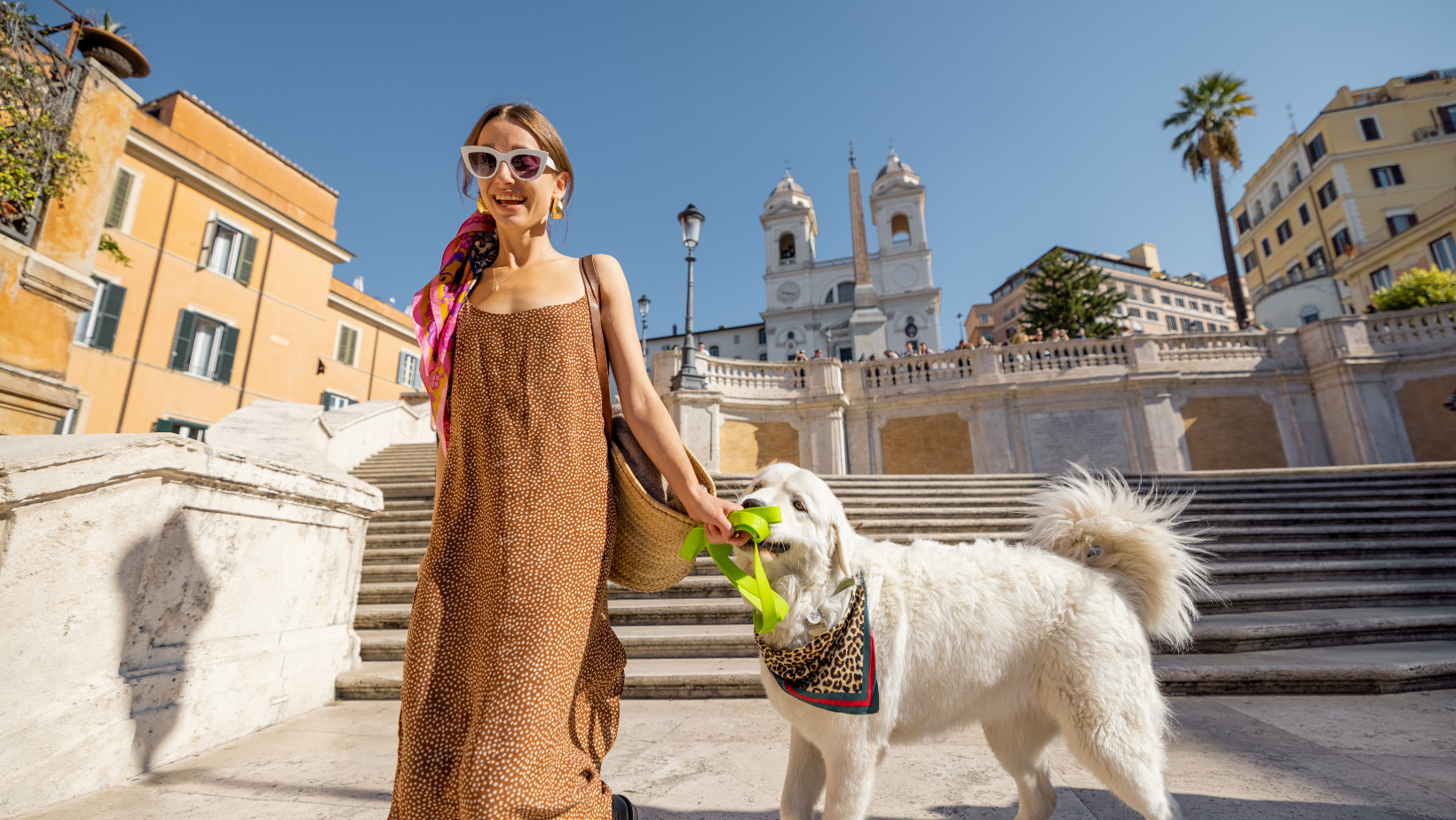
Rome has big villa parks like Villa Borghese, Villa Doria Pamphili and Villa Ada, plus a dog culture that's very relaxed. On ATAC's buses and metro, small and medium dogs ride on a leash with a muzzle and a paid ordinary ticket. They board through the rear door on buses (max two dogs per bus) and only use the first and last metro cars.
The catch: cobblestones, summer heat and crowds. Dogs also can't come into the big sights, so plan for someone to stay outside or for a sitter.
Best for: first-timers who want history and don't mind walking a lot.
My favorite part of Rome with Poppy was Trastevere. Half the neighborhood eats outside, with tables spilling into the piazzas and people dining by the fountains, so having a dog at your feet is completely normal. Rome was great with her.
Florence
Florence is compact, so you can walk almost everywhere. Parco delle Cascine gives you real space along the Arno. On Autolinee Toscane buses, one companion animal per passenger rides free, wearing a leash and muzzle or in a carrier (140 cm max, length plus width plus height).
The catch: narrow sidewalks packed with tour groups, and very little shade in the historic center. Florence gets just as hot as Rome in summer, which I learned firsthand.
Best for: small and medium dogs and owners who want to walk, not ride.
Milan
Milan is the most practical big city on this list. There's Parco Sempione, the Giardini Indro Montanelli and dozens of official dog areas. ATM lets small and medium dogs ride with a leash and muzzle, but not during rush hour (7:30 to 9:30 and 17:30 to 20:30), only one dog per vehicle, and you're supposed to carry your dog on escalators.
The catch: that escalator rule is a lot with a 60 lb lab, and the city's charm is more fashion week than postcard.
Best for: remote workers and anyone flying in and out a lot.
Bologna
Bologna has close to 40 km of porticoes (covered walkways) in the center, which means shade in summer and dry walks when it rains. Giardini Margherita is the go-to park. It's also less touristy than Florence and a quick train ride away from it.
The catch: TPER's dog rules for local buses aren't as clearly published as Rome's or Milan's, so check before you count on them.
Best for: food people and longer stays.
Turin
Turin is underrated with a dog. Parco del Valentino runs along the Po, the arcades give you covered walking, and the streets are wide and calm.
The catch: reports suggest local transit is stricter about larger dogs here than in Rome or Milan, so confirm GTT's rules if your dog won't fit in a carrier.
Best for: calm, big dogs and anyone who hates crowds.
Venice
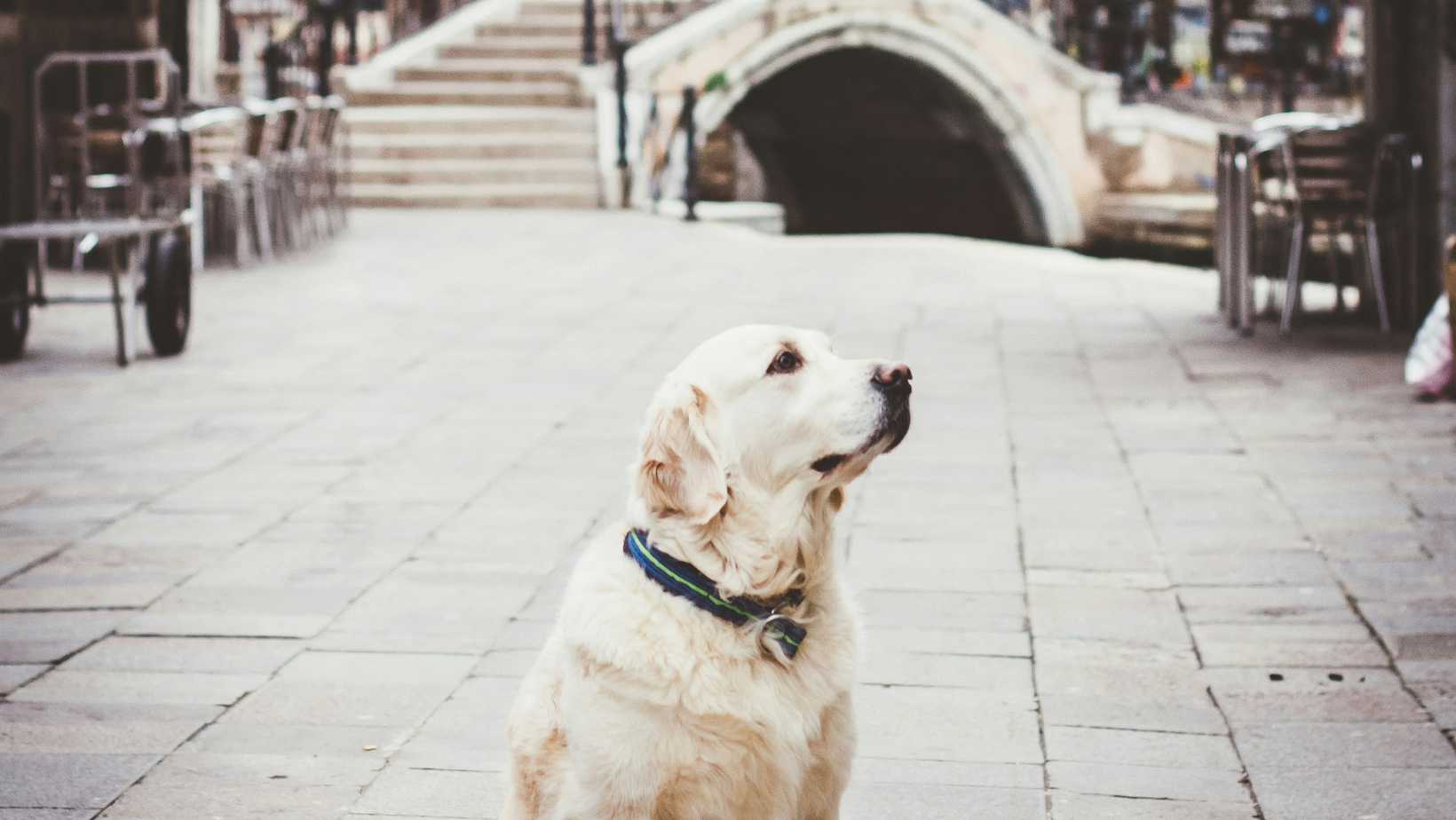
No cars means very walkable, and ACTV's vaporetto is reported to carry one dog per passenger free, muzzled and leashed or in a carrier. The national 1.5 m leash rule applies here too.
The catch: bridges. Hundreds of them, almost all with steps, which is rough on senior dogs and long-backed breeds. Grass is scarce, the crowds are intense and dogs aren't allowed on the cemetery island of San Michele.
Best for: small dogs you can carry, on a short stay.
Lake Como and Lake Garda
Lakefront promenades, easy hiking and ferries between towns make the lakes great for active dogs. It's slower and calmer than any city on this list.
The catch: you'll probably want a car, and a lot of places slow way down in winter. Ferry dog rules vary by operator, so check before you board.
Best for: active dogs and a slower trip.
Liguria and the Cinque Terre
Coastal trails, sea views and plenty of outdoor dining. Genoa or a town like Levanto or La Spezia makes a more practical base than the five villages themselves.
The catch: many regular beaches restrict dogs during the summer bathing season, so look for a designated dog beach (spiaggia per cani). The trails are steep, the stairs are endless and summer trains between villages are packed.
Best for: spring and fall trips with a fit, confident dog.
Comparing Dog-Friendly Cities in Italy at a Glance
If you just want the side-by-side, here it is.
Swipe to see more →
| City | Why it works | The catch | Best for |
|---|---|---|---|
| Rome | Huge villa parks, dogs allowed on ATAC with a ticket | Cobblestones, heat, crowds | First-timers |
| Florence | Compact and walkable, dogs ride regional buses free | Narrow, crowded sidewalks | Small to medium dogs |
| Milan | Lots of dog areas, clear ATM rules | No rush-hour rides, carry on escalators | Remote workers |
| Bologna | Porticoes for shade and rain | Local transit rules unconfirmed | Food lovers, long stays |
| Turin | Big riverside park, calm streets | Stricter on larger dogs | Big dogs, quiet trips |
| Venice | Car-free, dogs ride the vaporetto | Bridges with steps, little grass | Small, carryable dogs |
| Lake Como/Garda | Promenades, hiking, ferries | Need a car, quiet off-season | Active dogs |
| Liguria/Cinque Terre | Trails and coast | Summer beach limits, steep stairs | Shoulder season |
For most people, Rome, Florence or Milan is the easiest first base, and the others work best as side trips or a second stop.
Full disclosure: Poppy and I have only done Rome and Florence. The rest of this list comes from research and our client experiences, so double-check local rules before you go.
How to Pick Your Base in a Dog-Friendly Italian City
Here's the order I'd think about it in.
Stay in or near the centro storico. Walkable beats cheap when every errand is a dog walk.
Book ground floor or an elevator. Lots of Italian buildings are walk-ups, and four flights of stone stairs gets old fast.
Map the nearest park before you book. Five minutes to grass makes the morning walk easy.
Check the local transit rules. Every operator writes its own, as you can see above.
Book a place with air conditioning. Rome and Florence are brutally hot in summer, and AC isn't a given in Italian rentals. Check the listing.
Plan around the heat. Stone streets and cobblestones get hot enough to burn paws. Walk early and late, and think about leaving your dog in your air-conditioned room during the hottest part of the day (if your stay allows it). Our Summer Heat Embargoes post covers the flight side.
A few things to have on you every day:
A leash no longer than 1.5 m (the national ordinance limit)
A muzzle, even if your dog never wears it, since the ordinance says you have to carry one
Poop bags and a collapsible water bowl
A copy of your dog's health certificate and rabies record
My two non-negotiables for Poppy in Italy: a backpack carrier, so I can scoop her up for crowds, hot pavement or a long day of walking, and a collapsible water bowl. Between the heat and the miles, she needs water way more often than you'd think.
Most of the stress isn't the city, it's getting there
The airline, the certificate timing, the vet appointment that has to land in a specific window. If that's where you're stuck, our EU Pet Travel Guide walks through the whole process, and our Co-Pilot Concierge tier has us check every step with you. We also offer 1-hour consult calls to help with exactly this sort of thing.
Dog Travel in Italian Cities: Common Questions
-
It depends on the city. Rome's ATAC charges an ordinary ticket, while Autolinee Toscane in Florence lets one animal per passenger ride free. Check each operator before you go.
-
You have to carry one everywhere, and most local transit requires your dog to actually wear it on board.
-
Usually, yes, especially at casual places and outdoor tables. Food shops and supermarkets are generally off-limits, and it's always worth asking first.
-
Rome and Milan both allow medium dogs on transit, but big dogs can still be tricky. Florence and the lakes work well if you plan to walk or drive.
-
Yes. Small dogs in a carrier ride free on Trenitalia, and larger dogs need a leash, a muzzle and usually a ticket. Check current fares when you book.
Choosing Your Italian Home Base With Your Dog
The best of all the dog-friendly cities in Italy is the one that fits your dog: their size, their energy and how they feel about stairs. Get the paperwork right, pick a base near grass, and Italy does the rest.
Ready when you are.
– Mia + Poppy
