
Last updated: November 2026. By Mia Sgarlato, founder of Pet Passport Club
Pet cargo flights to Europe are how most medium and large dogs get from the US to the EU. But "cargo" means two different things, and mixing them up is one of the fastest ways to end up with a booking that doesn't work. This post walks through both, which airlines actually fly dogs across the Atlantic right now, and how to pick a route your dog can handle.
If you haven't read it yet, our pillar on flying to Europe with a dog covers the cabin option and the overall airline picture. This one goes deep on the hold.
Short answer: Most US dogs too big for the cabin fly to Europe in the hold as checked baggage on a European airline (Lufthansa, Air France, KLM or Condor), on the same flight as their owner. True manifest cargo, booked through a freight forwarder, is needed for the UK, very large dogs, and dogs flying separately from you. Delta and United only fly checked pets and cargo for military and State Department travelers.
Who this is for: US owners with a dog over the cabin weight limit who need to understand how cargo to Europe works before booking.
Checked Baggage vs Manifest Cargo: The Difference That Matters
Both put your dog in the hold of a passenger plane, in a temperature-controlled, pressurized section. What's different is how they're booked and handled.
Checked baggage (sometimes called "AVIH," animal in hold). Your dog is added to your ticket, flies on your flight, and gets checked in at the passenger counter with you. You pick them up at baggage claim or a special area on arrival. This is the simpler, cheaper option when it's available.
Manifest cargo. Your dog is booked as a cargo shipment through the airline's cargo division, almost always through a freight forwarder. Drop-off and pick-up happen at a cargo terminal, and customs clearance runs through the cargo side. Lufthansa Cargo, for example, says private individuals must book through a forwarder.
When manifest cargo is required
You'll usually need manifest cargo if:
You're flying to the UK. Great Britain doesn't allow pet dogs to arrive in the cabin or as checked baggage.
Your dog plus crate is over the airline's checked limit (75 kg on Air France and KLM).
Your dog is flying on a different schedule than you. Under the 2026 EU rules, a dog traveling more than 5 days apart from its owner is a commercial move, which means a commercial health certificate and cargo.
Your airline doesn't offer checked pets on that route, or to the public.
If none of those apply, checked baggage on a European airline is usually your best bet.
Which Airlines Fly Dogs in Cargo to Europe?
Here are the main options for getting a dog from the US to Europe in the hold. These are based on the airlines' published policies and widely reported limits as of November 2026. Call the airline to confirm before you book, because pet policies change often and aren't always online. Note who you spoke to and when.
Swipe to see more →
| Airline | Checked pet in hold | Manifest cargo | Main European hub | Watch out for |
|---|---|---|---|---|
| Lufthansa | Yes, register 72+ hrs ahead | Yes, via Lufthansa Cargo (forwarder) | Frankfurt (Animal Lounge) | Snub-nosed breeds as cargo only, with heat restrictions; strong breeds need a custom wood kennel |
| Air France | Yes, 8 to 75 kg with crate | Yes, via AF-KLM Cargo | Paris CDG | No snub-nosed breeds as checked baggage |
| KLM | Yes, up to 75 kg with crate | Yes, via AF-KLM Cargo | Amsterdam (Animal Hotel) | Connection-time limits; some winter embargoes |
| Condor | Yes, limited spots | Not offered (per trackers) | Frankfurt | Fewer US gateways |
| Delta / United | Military and State Dept only | Military and State Dept only | n/a | Not open to the public |
| American | Military and State Dept only | Yes, through the PetEmbark program | n/a | Accepts pets as manifest cargo through PetEmbark |
The takeaway: European carriers are where the options are. Lufthansa and the Air France-KLM group have dedicated animal facilities at their hubs and long track records moving pets across the Atlantic.
The Big Hubs: Frankfurt, Amsterdam and Paris
If your dog connects in Europe, the hub matters.
Lufthansa and the Frankfurt Animal Lounge
Lufthansa runs the Frankfurt Animal Lounge, a 24/7 animal care facility at its main hub. Dogs flying cargo through Frankfurt are cared for there between flights, and Lufthansa Cargo offers an upgraded Pet Premium service on Frankfurt connections with bigger kennels and arrival photos.
Two 2026 changes worth knowing:
Restricted breeds: Since March 1, 2026, Lufthansa Cargo only accepts kennels that fully meet the IATA LH05 standard for restricted breeds.
Checked-pet crates: Since May 4, 2026, Lufthansa added stricter crate requirements for dogs flying as checked baggage.
Air France-KLM and the Amsterdam Animal Hotel
The Air France-KLM-Martinair Cargo Animal Hotel at Amsterdam Schiphol cares for animals connecting on KLM. You can't book it like a hotel. It's part of the cargo operation, and pets on longer Amsterdam connections are routed through it. Staff feed, water and walk dogs between flights.
KLM limits how long a checked pet can sit in an Amsterdam connection, so longer layovers usually push your dog into cargo instead. Get the current limit from KLM when you book.
Paris CDG on Air France
Air France flies dogs from 8 kg up to 75 kg (with crate) in the hold. You have to add your pet to your booking at least 24 hours before departure, though in practice you want it confirmed the day you book.
One exception to know about: France bans pit bull type dogs, even in transit. If you're flying a pit bull or AmStaff on KLM, make sure the routing goes through Amsterdam and never connects through CDG.
How to Pick the Best Route for Your Dog
The best pet cargo flight to Europe is the one with the fewest moving parts. In order of importance:
Fly nonstop if you can. No connection means no transfer handling, no missed-connection risk, and less total time in the crate.
If you have to connect, connect in Europe, not the US. A US connection adds a second airline's rules and often a US weather embargo. Frankfurt, Amsterdam and Paris are built for animal transfers.
Avoid summer and deep winter at hot or cold hubs. Heat embargoes can hit May through September, and winter embargoes can cover November through March on some routes. Our winter airline embargo post lists the big ones.
Book overnight flights when possible. Cooler tarmac temperatures, and your dog sleeps through most of it.
Match the airline to your dog's breed. Lufthansa, Air France and KLM won't take most snub-nosed breeds as checked baggage, so those dogs usually need manifest cargo. For American Pit Bull Terriers and American Staffordshire Terriers, KLM is the easier option: it takes them as manifest cargo in a standard plastic IATA kennel instead of a custom wood one. When you book, make sure KLM routes them through Amsterdam, not Paris: France bans pit bull type dogs, even in transit.
Lining up the route, the airline's pet desk, the crate, and the health certificate timing all at once is a lot. If you'd rather hand that off, our Full-Service Concierge can book the cargo and coordinate the logistics for you. We never take custody of your dog, but we manage the moving parts.
A Real Pet Cargo Flight to Europe: Zora and Zeus, Atlanta to Dublin
Here's what this looks like on an actual move. My clients are relocating their two dogs, Zora and Zeus, from Atlanta to Dublin, Ireland. Both dogs fall into the pit bull and AmStaff group, which takes a lot of airlines off the table right away.
The owners can't fly with them, so the dogs are traveling on a commercial health certificate instead of the regular non-commercial one. Under the 2026 EU rules, that's what happens when a dog flies more than 5 days apart from its owner. It also means manifest cargo, not checked baggage.
Here's how we built the route:
Airline: KLM, which takes pit bulls and AmStaffs as manifest cargo
Kennels: Standard plastic IATA kennels, since KLM doesn't require the custom wood kennels Lufthansa does
Routing: Atlanta to Amsterdam, then on to Dublin, with no connection through Paris (France bans these breeds, even in transit)
The takeaway: with a restricted breed, the airline, the kennel and the connecting airport all have to line up. Get one wrong and the whole booking falls apart. If your dog is in the same spot, this is exactly the kind of route we help plan.
Getting the Crate Right for Cargo to Europe
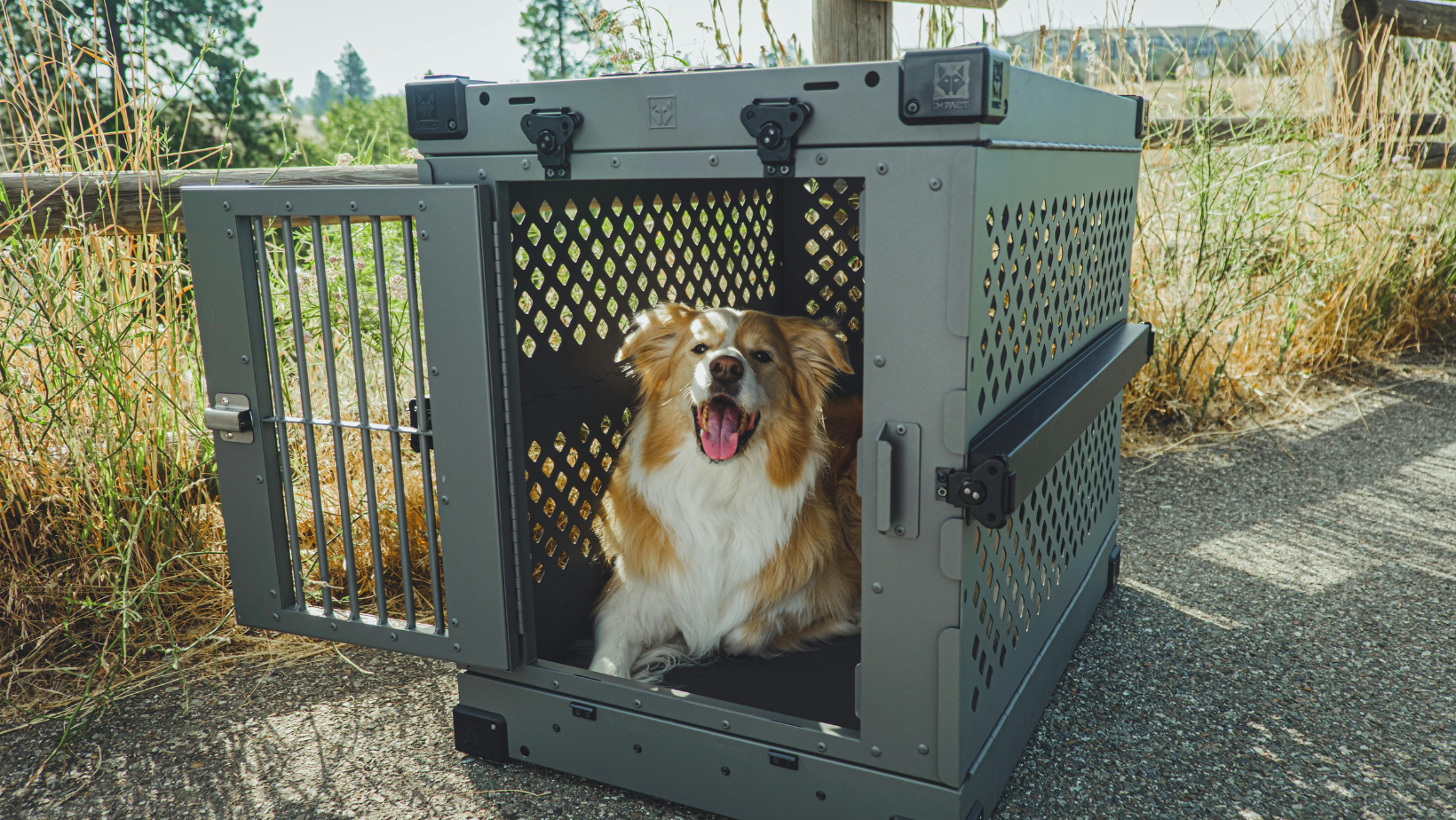
Airlines reject dogs at check-in for crate problems more than you'd think. Your crate has to meet IATA Live Animal Regulations, which generally means:
Hard-sided plastic or wood, with a solid roof and metal door
Metal hardware (bolts, not plastic clips) holding the top and bottom together
Ventilation on all sides, with openings small enough that paws can't get through (Lufthansa specifies 25 x 25 mm max for dogs)
Enough room for your dog to stand, turn around and lie down naturally, without their head touching the roof
Food and water bowls attached inside and fillable from outside
Sizing is where people get it wrong. Measure your dog standing, not sitting, and use our kennel calculator to find the right size before you buy.
Then crate-train. A dog that already likes their crate has a much easier flight than one meeting it at the airport.
What to Expect on Travel Day
For checked baggage on a European airline:
Arrive early. Pets check in at the counter, not curbside. Give yourself extra time.
Bring originals. Your USDA-endorsed EU health certificate, rabies certificate, and your airline pet confirmation.
Don't sedate. Most airlines refuse sedated pets in the hold because sedation affects breathing and balance at altitude. Talk to your vet about calming options that are allowed.
On arrival, your dog goes through a document check at the EU point of entry. Healthy dogs with the right paperwork don't quarantine.
For manifest cargo, your forwarder will tell you the drop-off time at the cargo terminal, usually several hours before departure, and the pick-up process at the destination cargo terminal.
Common Mistakes With Pet Cargo Flights to Europe
Booking "cargo" when you meant checked baggage, or the other way around. Ask the airline which one you're on.
Planning to fly a dog separately without realizing it now needs a commercial certificate if it's more than 5 days apart from you.
Assuming Delta or United will take your dog. Not unless you're military or State Department.
Buying the crate before measuring the dog, or buying one with plastic clips.
Booking a long US connection in July. That's where heat embargoes bite.
Skipping the phone call. Policies change, and what's online can lag.
Pet Cargo Flights to Europe FAQ
-
Millions of pets fly in the hold every year, and the hold is pressurized and temperature-controlled. The real risks are heat, long connections and snub-nosed breeds. Flying nonstop, avoiding extreme seasons and using the right crate cuts most of them.
-
Checked baggage on a European airline is usually a few hundred dollars each way, depending on route and crate size. Manifest cargo costs more because it includes forwarder fees, airport handling and customs clearance. Get a quote for your exact route and crate size.
-
Yes, but under the 2026 EU rules, a dog traveling more than 5 days apart from its owner (or an authorized person) is a commercial move. That means a commercial health certificate and manifest cargo through a forwarder.
-
Lufthansa, Air France and KLM are the big three for US-to-Europe dogs in the hold, with KLM and Air France accepting up to 75 kg with the crate. Condor is another option on its routes.
-
For checked baggage, no. You book it with the airline yourself. For manifest cargo, airlines like Lufthansa require a freight forwarder, so you'll need one (or someone coordinating it for you).
-
Start planning 2 to 3 months out. Hold space per flight is limited, so confirm your dog's spot as soon as you know your dates.
Planning Your Dog's Cargo Flight to Europe
Cargo sounds scary, but most of the stress comes from not knowing which kind of booking you need and which airline will actually say yes. Sort those two things first and everything else follows.
If you want help picking the route and lining up the airline, we offer 1-hour consult calls to help with exactly this. For the paperwork, our EU guide has every step.
Because your job is to enjoy the trip, and ours is to help you get there.
— Mia + Poppy
