
What Is a Pet Passport and Do You Actually Need One?
Last updated: June 2026. By Mia Sgarlato, founder of Pet Passport Club
If you've started Googling how to take your dog or cat abroad, you've run into the phrase "pet passport" about forty times by now. And if you live in the US, almost everything you've read about it is a little bit wrong. So let's fix that.
Short answer: A pet passport is an official EU travel document that records your pet's microchip, rabies vaccination, and certain treatments. As of April 22, 2026, only people who live in the EU can get one. If you're a US resident (or a UK one), you can't get an EU pet passport at all. You use a government-endorsed pet health certificate instead. Same goal, slightly different paperwork.
Who this is for: US pet owners planning to fly a dog or cat to Europe who just want to know which document they actually need before they spend money at the vet.
What is a pet passport, exactly?
An EU pet passport is a small blue booklet issued by an authorized veterinarian in an EU country. It's a lifetime record of your pet's identity and health for travel, including:
the microchip number
the rabies vaccination dates
and where required, tapeworm treatment
Once it's issued and your pet's rabies shots stay current, you don't redo it for every trip. That's the part people love, and it's exactly why "pet passport" became the catch-all term for pet travel paperwork.
Here's the catch most blog posts skip: the EU pet passport is an EU document, for EU residents. It was never the thing a US owner used to fly a dog from New York to Rome. People just borrowed the word because it's easier to say than "USDA-endorsed EU health certificate."
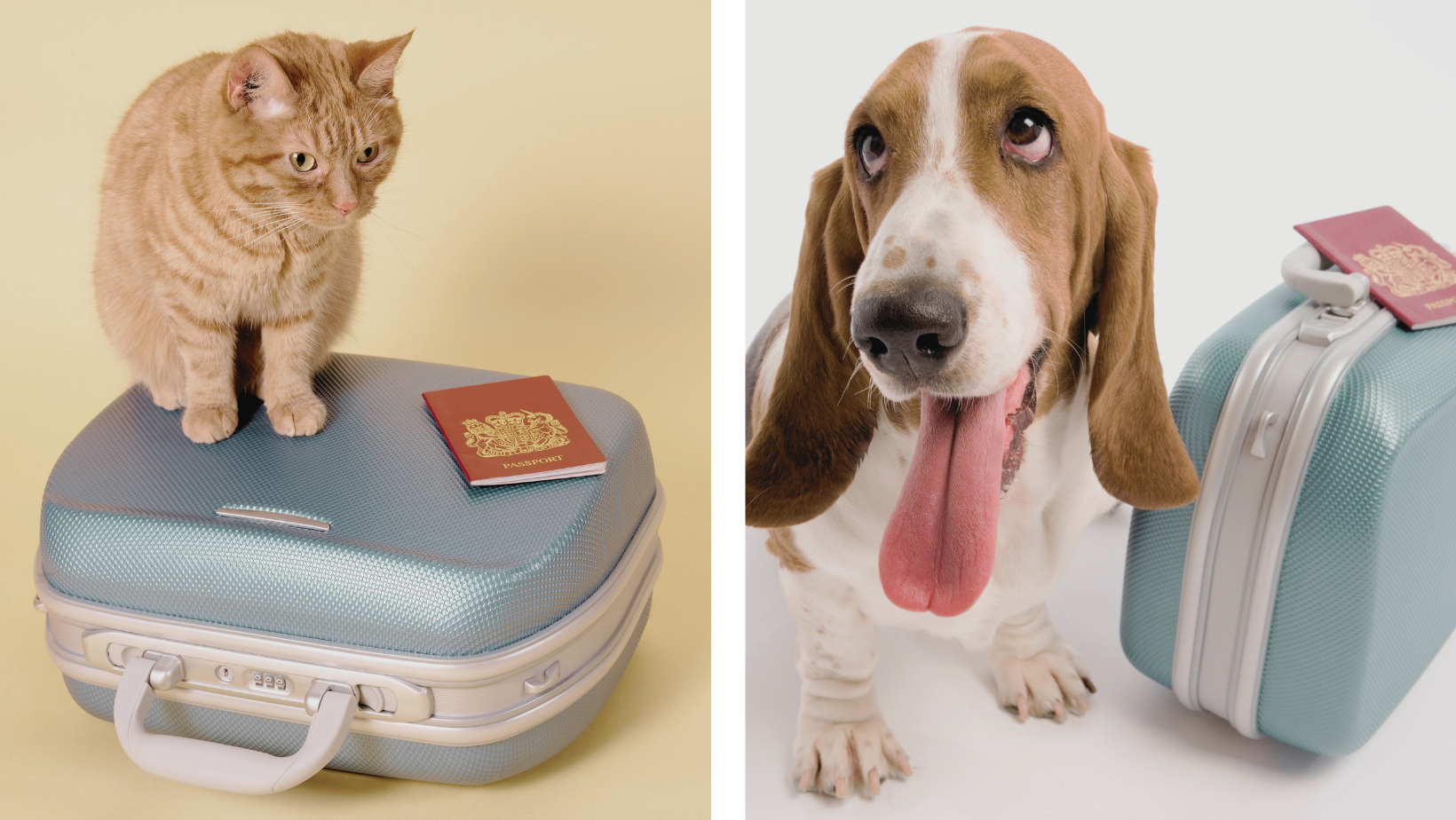
Do you actually need a pet passport? Probably not the one you think.
This is where 2026 changed the game. On April 22, 2026, new EU rules (legislation EU 2026/131) took effect, and an EU pet passport can now only be issued to someone who can prove they reside in an EU member state. If you live in the US or the UK, you're out. You cannot get an EU pet passport, full stop.
I learned this one firsthand: in summer 2025, Poppy and I were in Paris, and a lovely French vet issued her an actual EU pet passport. I thought we were set for life. Then the April 2026 rule landed, and that passport is no longer valid for a US-resident pet to enter the EU. So for our summer 2026 trip, I'm doing the full health certificate process like everybody else — and if it caught me off guard, it probably caught you off guard too.
What US owners need instead of a pet passport
The US equivalent of a pet passport is a USDA-endorsed EU health certificate. It's a pet health certificate completed by a USDA-accredited veterinarian and then endorsed by USDA APHIS before you fly. It's the document that actually gets your dog or cat into Europe.
The big difference from a pet passport: this certificate is tied to a single trip into the EU, not your pet's lifetime. It's valid for 10 days to get you into Europe, and once you're in, it covers onward travel between EU countries for up to six months. After that, the next trip means a new certificate. It's more paperwork than a lifetime passport, but it's completely doable once you know the timeline.
The full process has a specific order and timing, and getting any of it out of sequence is the most common way trips get derailed. I'll walk through it step by step below.
Pet passport vs. US health certificate at a glance
| EU Pet Passport | USDA-Endorsed EU Health Certificate (US) | |
|---|---|---|
| Who can get it | EU residents only (since April 22, 2026) | US residents |
| Reusable? | Yes, for life if rabies stays current | No, single trip into the EU |
| Validity | Ongoing | 10 days to enter, then up to 6 months onward travel within the EU |
| Who issues it | An authorised EU vet | USDA-accredited vet, endorsed by USDA APHIS |
| Covers dogs and cats? | Yes (and ferrets) | Yes (and ferrets) |
How to get a pet passport (or the US version): step by step
If you're searching for how to get a pet passport from the US, what you actually want is the USDA health certificate workflow, and the order matters more than anything else.
In short: microchip first, then the rabies vaccination (it only counts if the chip went in first), then a minimum 21-day wait, then a USDA-accredited vet completes your EU health certificate, then USDA APHIS endorses it, then you enter the EU within 10 days of that endorsement.
That's the shape of it. The timing, the country-specific quirks, and the exact paperwork are where people slip, so I walk through all of it step by step in our full guide: how to get your pet into the EU. If you bookmark one link from this post, make it that one.
What about a cat passport?
Good news for the cat people: a cat passport works exactly like a dog one. The EU rules for microchip, rabies vaccination, and documentation are the same for cats, dogs, and ferrets. So if you're searching "cat passport," everything above applies to you too. Your cat needs the ISO microchip, the rabies vaccination in the right order, and the same USDA-endorsed EU health certificate. The species changes; the paperwork doesn't.
UK dog passport: what changed after Brexit
If you've seen the term "UK dog passport" and gotten confused, you're not alone. Post-Brexit, GB residents are in the same boat as US owners in spirit, but the document itself is different. They use a Great Britain Animal Health Certificate, usually shortened to AHC, issued by an Official Veterinarian under APHA, the UK's Animal and Plant Health Agency.
There's no USDA involvement on the UK side. Like the US certificate, a GB AHC is single-use, issued within 10 days of travel, and since April 2026 it also covers up to six months of onward travel within the EU and re-entry to Great Britain.
It's worth knowing this even as a US traveler, because a lot of the "pet passport" advice online is written for UK owners, and their AHC is a different document from your USDA-endorsed certificate.
How much does a pet passport cost?
Since there's no single "pet passport" you buy, the real question is how much does a dog passport cost in practice, meaning the full set of documents and vet visits. For UK owners, a Great Britain Animal Health Certificate (AHC) alone usually runs around £110 to £220, and the all-in cost with microchipping and rabies can land anywhere from roughly £125 to £400. US costs work differently because of the USDA endorsement step, so I broke the full US pet passport cost breakdown down in its own post.
Common mistakes I see all the time
Vaccinating before microchipping. The number one trip-killer. The rabies shot only counts if the chip went in first.
Assuming an EU-issued passport still works. If you got one before April 2026 as a US resident, it's no longer valid for entry. (Hi, that was me.)
Booking the vet too late. Between the 21-day rabies wait and the USDA endorsement turnaround, this is a weeks-long process, not a days-long one.
Treating every EU country as identical. The base rules match, but some destinations add steps. Always check your specific country.
Frequent questions about pet passports
-
Not since April 22, 2026. EU pet passports are now issued only to residents of EU member states. US residents use a USDA-endorsed EU health certificate instead.
-
They do the same job but they're different documents. A pet passport is a reusable EU booklet for EU residents. A pet health certificate is the single-use document US and UK owners use for each trip: in the US that's a USDA-endorsed EU health certificate, and in Great Britain it's an Animal Health Certificate (AHC) from an Official Veterinarian.
-
It's valid for 10 days to enter the EU from the date USDA APHIS endorses it, and then good for onward travel within the EU for up to six months.
-
Cats follow the same rules as dogs. A cat needs an ISO microchip, a current rabies vaccination given after the chip, and the same USDA-endorsed EU health certificate to travel from the US.
-
Give yourself at least a month, and more if your pet's rabies vaccination isn't current. The 21-day post-vaccination wait plus USDA endorsement time adds up fast.
-
Coming directly from the US, no blood titer test is required for EU entry. That requirement applies to certain other countries, which is a common point of confusion.

The bottom line
If you take one thing from this article: the "pet passport" you've been Googling probably isn't the document you need. As a US owner traveling to Europe with a dog or cat, what you actually need is a USDA-endorsed EU health certificate, done in the right order and with enough lead time. Get the sequence right and the rest is just logistics. When you're ready to walk through it, our EU guide has the whole process.
If you'd rather not project-manage all of it yourself, that's exactly what we do at Pet Passport Club. Our Guided Travel Prep walks you through the timeline, Co-Pilot Concierge handles the trickier pieces with you, and Full-Service Concierge takes the whole thing off your plate.
Because your job is to enjoy the trip — ours is to help you get there.
— Mia + Poppy
