
How to Take Your Dog to Hawaii: The Rules Are Stricter Than You Think
Last updated: August 2026. By Mia Sgarlato, founder of Pet Passport Club
Most people assume that traveling to Hawaii with a dog is easy, because it's not really "international." It's a domestic flight, same country, same passport, no big deal. Then they look up the rules and their stomach drops.
Hawaii is, by a wide margin, the strictest place in the United States to bring a dog. It has a rabies blood test, mandatory waiting periods, a document deadline, and a very real risk of your dog sitting in quarantine for up to 120 days if you get a single step wrong. It is more involved than taking a dog to most of Europe.
Short answer: To take your dog to Hawaii and skip quarantine, your dog needs a microchip, current rabies vaccinations, a passing OIE-FAVN rabies antibody blood test, an approved tick treatment, and its paperwork submitted to the state ahead of arrival. There's a mandatory waiting period after the FAVN test, and lab results can take one to two months, so plan on a six-month to one-year runway.
Who this is for: US residents flying to Hawaii with a dog, whether it's a vacation or a permanent move. The requirements are the same either way, and they're strict enough that starting early matters more here than almost anywhere.
Why Hawaii is so strict
Hawaii is the only rabies-free state in the country, and it has stayed that way on purpose. There is no rabies in the islands, which is rare and valuable, and the entire import system exists to keep it that way.
That's the mindset to bring to this. Hawaii isn't being difficult for its own sake. It's protecting an ecosystem, so it treats every incoming dog as a potential rabies risk until the paperwork proves otherwise. Once you understand that, the blood test and the waiting periods make sense: they're the state's way of being certain your dog is safe before it ever lands.

The two ways in: quick release or 120-day quarantine
Every dog arriving in Hawaii lands in one of two outcomes, and the difference between them is enormous.
Direct release or the 5-Day-Or-Less program.
If your dog meets every requirement and your documents arrive on time, your dog can be released to you at the airport (Direct Airport Release in Honolulu, or direct release at the neighbor-island airports in Kona, Kahului, and Līhu'e), or held for five days or less. This is the outcome you're aiming for.
Up to 120 days of quarantine.
If your dog misses a requirement, the timing is off, or the paperwork is late, it can be held in state quarantine for up to 120 days, at your expense. That's four months without your dog, and it's entirely avoidable.
The whole game is qualifying for the first path. Everything below is about that.
What your dog needs to enter hawaii
At a high level, here's what Hawaii requires. The exact sequence and timing is where people get tripped up, so treat this as the overview and confirm the precise windows with the Hawaii Department of Agriculture before you rely on them.
A microchip, implanted before anything else so every record ties to your specific dog.
Rabies vaccinations in your dog's history, timed correctly, with a built-in waiting period before arrival.
A passing OIE-FAVN rabies antibody blood test, processed through one of the state's approved labs. A successful test carries its own waiting period before your dog can arrive, which is a big part of why Hawaii takes so long.
An approved tick treatment before travel, from Hawaii's accepted list.
Your paperwork submitted to the state ahead of arrival, with the timing done right to qualify for the fastest release rather than a quarantine hold.
Each of those has specific rules underneath it, the exact FAVN timing, which tick products count, and precisely how the documents get submitted, and that's the part that decides quarantine versus airport pickup. We lay out the exact steps and windows in our step-by-step Hawaii guide, which is built to keep you on the right side of every deadline.
The timeline is the hard part
If there's one thing that separates a smooth Hawaii trip from a quarantine nightmare, it's starting early enough. This is not a destination you can pull together in a few weeks.
Here's why: the rabies blood test can't be rushed, and lab results are currently running one to two months behind. On top of that, there's a mandatory waiting period after a passing test before your dog can arrive, plus the rabies vaccination timing on top of it. Stack those up and you're looking at months of fixed waiting that no amount of urgency can shorten.
That's why we tell people to give Hawaii six months to a year. Start late and you don't just risk stress, you risk the 120-day quarantine, because a missed window can't be undone once you're at the airport.
What taking your dog to hawaii costs
Beyond your vet, the blood test, the microchip, and the flight, Hawaii charges its own program fees. Here's the state side of the bill.
Those are the state's fees only. Your FAVN test, vet visits, vaccinations, tick treatment, and airfare are separate, so the real total runs well above the program fee alone. The upside: doing it right the first time is far cheaper than a quarantine stay.
The recent change: a screwworm line on your health certificate
Here's a newer requirement worth knowing, because it's easy to miss. Hawaii itself is still free of New World screwworm, but the parasite was detected on the US mainland in 2026, and Hawaii responded the way it responds to any pest risk, by tightening what comes in.
Hawaii now requires a specific screwworm statement on the health certificate for animals entering the state. The wording the state wants is that all animals were inspected and found free of evidence of New World screwworm infestation, and your accredited vet adds that line to the certificate. It's a small addition, but it's now part of the paperwork, so it's worth confirming your vet includes it rather than assuming the standard certificate covers it.
This is exactly the kind of rule that's changing fast right now, so check the current wording and any other screwworm steps with the Hawaii Department of Agriculture before you travel.
The mistake I see most with Hawaii
I'll be honest, Hawaii is the destination that generates the most anxious messages I get, and the story is almost always the same: someone booked a trip a few weeks out, assumed a domestic flight meant easy rules, and only then discovered the blood test and the waiting periods.
By then, the math often doesn't work, and they're staring at either a delayed trip or a quarantine stay. It's heartbreaking and completely preventable. Hawaii punishes late starts harder than anywhere, and rewards the people who treat it like the months-long process it actually is. If you take one thing from this post, let it be this: start the Hawaii clock the moment you know you're going.
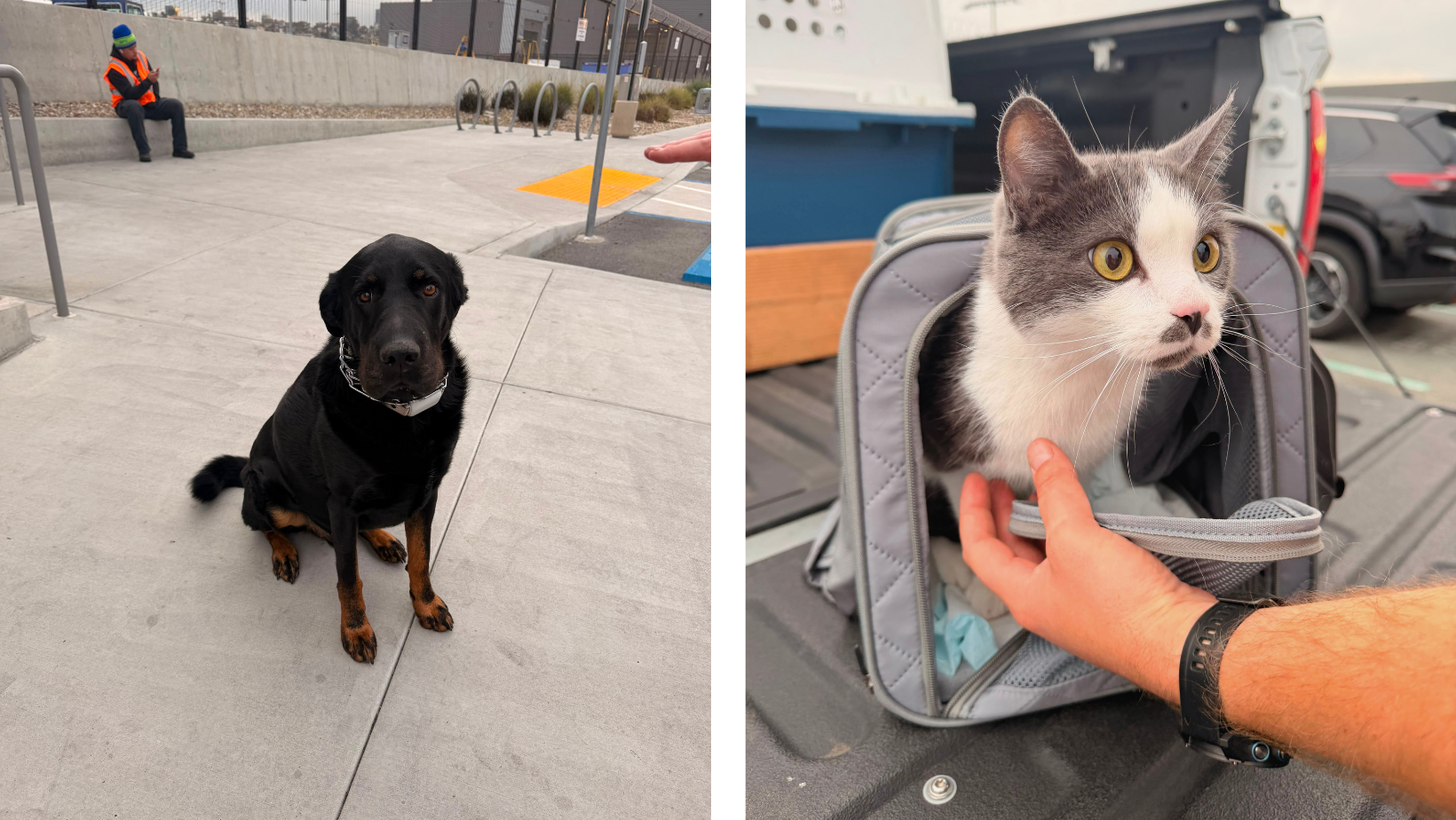
We helped bring Charli & Oakley from Salt Lake City to Kona, Hawaii
Taking Your Dog to Hawaii FAQ
-
Not if you meet every requirement. Dogs that complete the microchip, current rabies vaccinations, a passing FAVN blood test, tick treatment, and on-time paperwork can qualify for direct airport release or the 5-Day-Or-Less program. Dogs that miss a step can be held up to 120 days.
-
Six months to a year. The FAVN blood test, its 1-to-2-month lab processing, and the mandatory waiting periods create months of fixed waiting that can't be shortened, so Hawaii needs far more lead time than most destinations.
-
Because Hawaii is the only rabies-free state and runs its own program to stay that way, adding a rabies blood test and waiting periods that the EU doesn't require of US dogs. It's one of the strictest destinations anywhere, despite being a domestic flight.
-
The OIE-FAVN is a rabies antibody blood test that confirms your dog's vaccination is protective. It has to be processed by an approved lab and pass, and there's a mandatory waiting period after a successful result before your dog can arrive in Hawaii.
-
The state program fee is $185 for Direct Airport Release, $244 for the 5-Day-Or-Less program, plus $165 for a neighbor-island permit or $98 for re-entry where they apply. Your vet, blood test, vaccinations, tick treatment, and airfare are all separate.
-
Yes. Hawaii's entry requirements are the same whether you're visiting or relocating, so even a short trip needs the full microchip, rabies, FAVN, and paperwork process.
Getting your dog to Hawaii without the quarantine scare
Hawaii is strict, but it's not mysterious. It rewards people who start early and follow the steps in the right order, and it only punishes the ones who wing it. The blood test and the waits are the whole reason to begin months ahead.
If you want to handle it yourself with every deadline mapped out, our step-by-step Hawaii guide walks you through the exact sequence, timing, and documents so you don't trip a quarantine. And if you'd rather not carry the risk on a high-stakes destination like this one, our concierge services can plan or handle the whole thing with you.
Start early, and Hawaii is absolutely doable.
— Mia + Poppy 🐾
