
How to Fly With a Cat: Everything You Need to Know Before Booking
Last updated: July 2026. By Mia Sgarlato, founder of Pet Passport Club
If you're figuring out how to fly with a cat, here's the reassuring part up front: cats are often easier to fly with than dogs. Most cats are small enough to travel in the cabin, so you rarely deal with the cargo logistics that come with bigger animals.
The trickier part is everything around the flight: the carrier rules, the paperwork if you're leaving the country, and the calm-cat question that everyone worries about. None of it is hard, but it's worth knowing before you book rather than the night before you fly.
Short answer: To fly with a cat, book a pet reservation with an airline that allows cats in the cabin, use a soft-sided carrier that fits under the seat, and, if you're traveling internationally, get a microchip, rabies vaccination, and a USDA-endorsed health certificate for your destination. Most cats travel in the cabin, not cargo.
Who this is for: Anyone flying with a cat, domestic or international, from the US. If you're moving abroad or taking a longer trip, the international paperwork section is the part to read closely.
Can cats fly in the cabin?
Yes, and most do. Because cats are small, they almost always meet the in-cabin size limits, so your cat rides in a carrier under the seat in front of you rather than in the hold. That's less stressful for the cat and for you.
The catch is space. Airlines cap how many pets travel in the cabin per flight, and cats compete for the same slots as small dogs. So the reservation matters as much as the ticket. Book your cat's spot the moment you book your own.
A few cats do end up traveling as cargo, usually on international routes that don't allow in-cabin pets, or as part of a larger move. But for most trips, cabin is the norm.
Choosing the right cat carrier
The carrier is the one piece of gear you can't improvise, because it has to meet the airline's under-seat dimensions and those vary slightly by carrier.
What to look for:
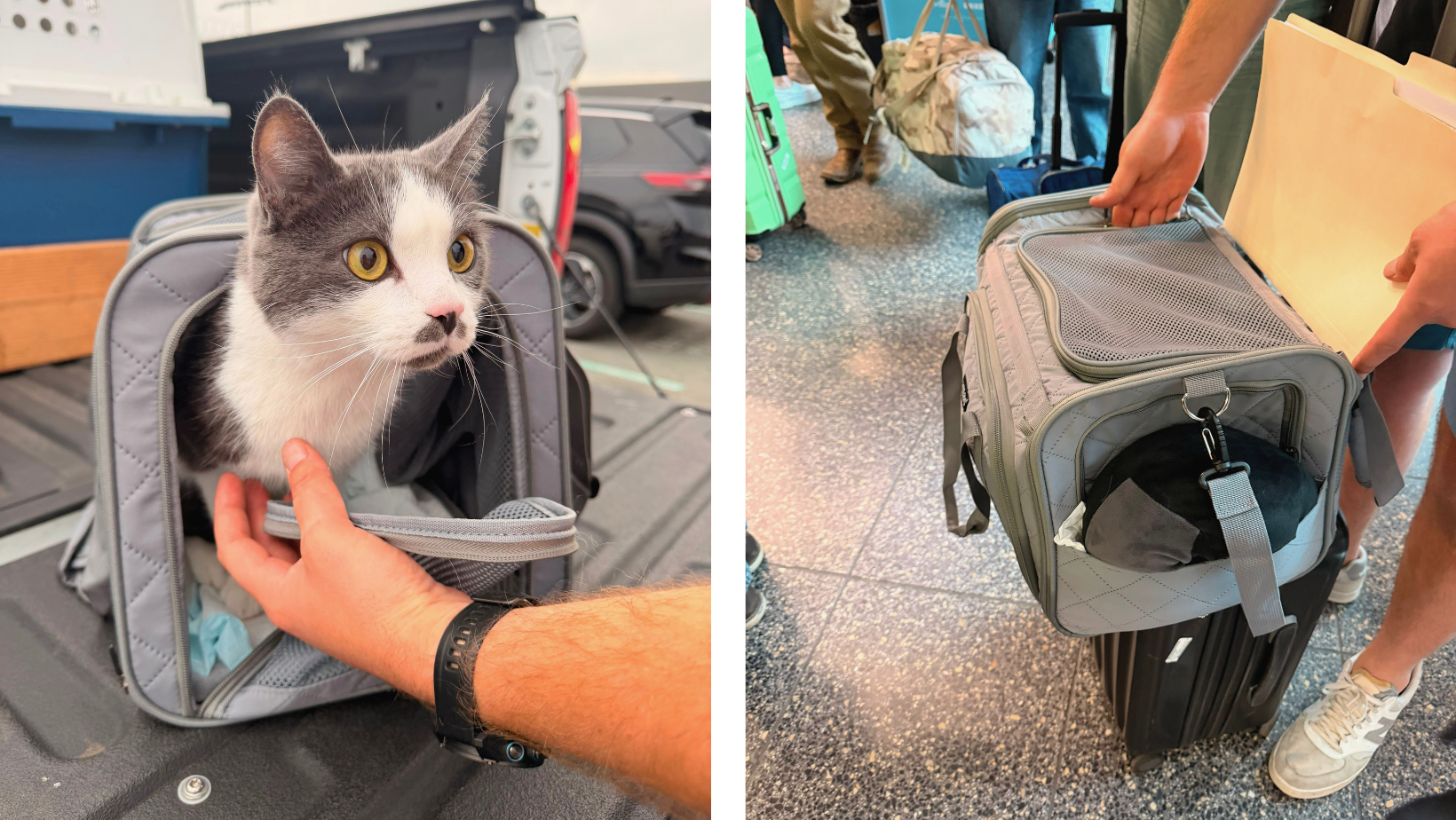
Soft-sided and airline-approved, since soft carriers squeeze under the seat better than hard ones and most airlines prefer them for the cabin.
The right size for your airline, so measure the under-seat space for your specific plane, not a generic number.
Good ventilation on multiple sides, so your cat stays comfortable.
A leak-proof, padded bottom, because long travel days happen.
Get the carrier well before your trip and leave it open at home with a blanket and treats inside. A cat that already sees the carrier as a safe napping spot travels far better than one that only meets it on flight day.
The paperwork for flying internationally with a cat
For a domestic US flight, you usually just need the airline's pet reservation and a health certificate if the airline or state asks for one. International travel is where it gets more involved, and the requirements mostly mirror what dogs need.
To fly internationally, your cat needs an ISO-compliant microchip, a rabies vaccination given after the chip, and a USDA-endorsed health certificate for your destination. The certificate is completed by a USDA-accredited vet and endorsed by USDA APHIS within a set window before travel. The health certificate process works the same for cats as it does for dogs.
Destinations differ. The EU wants that microchip-rabies-certificate combination, and one certificate covers onward travel between EU countries. The UK adds its own rules. If you're flying internationally with a cat, the overall process looks a lot like flying with a dog, so that guide is a useful companion for the logistics.
Should you sedate a cat for flying?
This is the question I get most, so let me be direct: vets and airlines generally advise against sedating cats for air travel, and many airlines won't accept a visibly sedated animal.
Sedatives can affect breathing and temperature regulation at altitude, which is riskier in a pressurized cabin than at home.
Instead of sedation, most calm-cat success comes from preparation: carrier training in the weeks before, a familiar-smelling blanket, and a calm handler. If your cat is especially anxious, talk to your vet about options well ahead of time rather than reaching for medication on flight day.
Keeping your cat calm on travel day
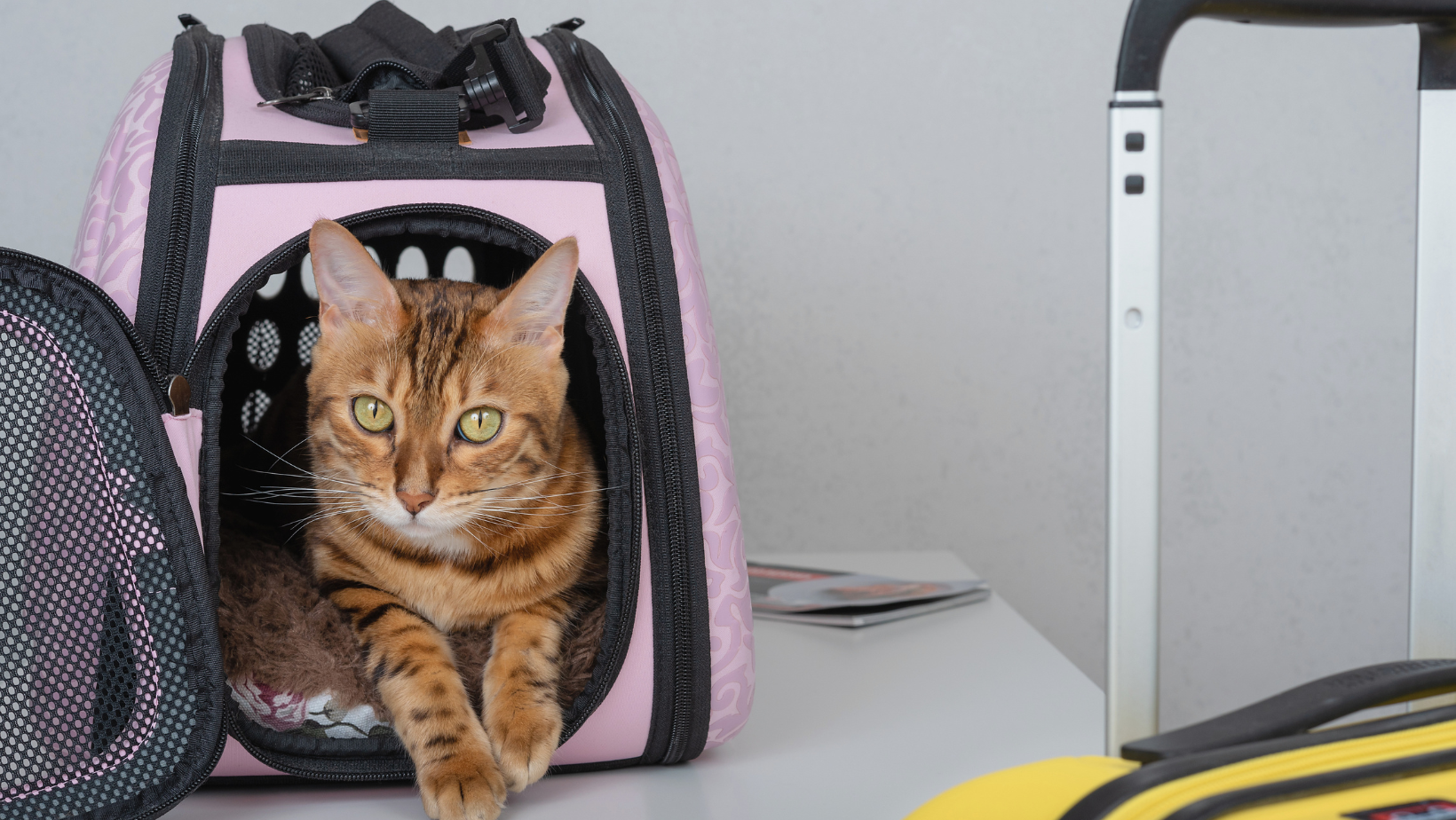
A few things make travel day easier for a cat:
Skip a big meal right before. A light meal a few hours ahead is gentler on a nervous stomach than a full one.
Line the carrier with something that smells like home, a worn shirt or their usual blanket.
Add a pee pad, and pack spares. Nervous cats often have an accident, and a quick pad swap in the airport bathroom keeps a small mess from becoming a travel-day problem.
Stay calm yourself. Cats read your energy, so a relaxed handler helps more than you'd think.
Plan the security line. You'll carry your cat through the scanner while the carrier goes through separately, so a well-fitted harness inside the carrier adds a layer of safety.
Most cats settle once the plane is moving and the cabin hums. The hardest part is usually the airport, not the flight.
Why I never fly without a pee pad
I'll tell on my own cat for this one. When I flew with Zeus, he was calm right up until we boarded, and then the nerves caught up with him and he peed in his carrier.
Here's why it turned into a non-event instead of a travel-day disaster: I'd lined his carrier with a pee pad and packed a few spares in my bag. So at the first chance, I took him into the airport bathroom, swapped the wet pad for a dry one, and we both carried on like nothing had happened. No soaked cat, no ruined carrier, no panic.
That's the tip I give every cat owner now: line the carrier with a pee pad and bring extras. Even a calm cat can get nervous on travel day, and the difference between a rough flight and an easy one is often just a fresh pad and a two-minute bathroom stop.
Common mistakes US Pet owners make
Booking the flight but not the cat. Cabin pet slots are limited and separate from your seat. Reserve your cat's spot right away.
Buying the wrong carrier. It has to fit your specific airline's under-seat space and should be soft-sided.
Skipping carrier training. A cat meeting its carrier on flight day is a recipe for a rough trip.
Asking about sedation instead of preparation. Most airlines discourage it and it carries real risks. Train instead.
Forgetting international paperwork. A cat crossing borders needs the same microchip, rabies, and health certificate a dog does.
How to Fly with a Cat FAQ
-
Usually yes. Most cats meet in-cabin size limits and travel in a carrier under the seat. You'll need to book a pet reservation, since airlines cap how many pets fly in the cabin per flight.
-
For domestic US flights, often just the airline's pet reservation and sometimes a health certificate. For international travel, a cat needs an ISO-compliant microchip, a rabies vaccination given after the chip, and a USDA-endorsed health certificate for the destination.
-
Most vets and airlines advise against it, because sedatives can affect breathing and temperature regulation at altitude. Carrier training and a familiar-smelling blanket are safer ways to keep a cat calm. Talk to your vet early if your cat is very anxious.
-
A soft-sided, airline-approved carrier that fits under the seat of your specific plane, with good ventilation and a padded, leak-proof bottom. Measure your airline's under-seat dimensions before buying.
-
Yes. The requirements are the same core set as for dogs: microchip, rabies vaccination after the chip, and a USDA-endorsed EU health certificate issued within 10 days of arrival. One certificate covers onward travel within the EU.
-
Cats have far simpler US entry rules than dogs. The strict CDC dog-import requirements don't apply to cats, though your cat should appear healthy on arrival and may be examined. Confirm your airline's return requirements when you book.
Flying with your cat, sorted
Flying with a cat is mostly about two things: booking the cabin spot early and doing the carrier prep so travel day isn't a shock. Add the paperwork if you're leaving the country, and you're set.
If you're taking your cat abroad and want the paperwork and timing handled for your exact route, our Guided Travel Prep walks you through every step. And if you'd rather it all be done for you, Full-Service Concierge takes the whole process off your plate.
The paperwork is the hardest part. We've got it covered.
— Mia + Poppy 🐾
