
Flying With Your Dog Internationally: A Step-by-Step Guide
Last updated: July 2026. By Mia Sgarlato, founder of Pet Passport Club
Flying with your dog internationally is one of those things that sounds simple until you start reading the fine print. Then you hit weight limits, cargo rules, breed restrictions, temperature embargoes, and a stack of paperwork that all has to line up, and it stops feeling simple fast.
Here's the good news: it's very doable. Poppy has done it to seven countries. But it rewards people who understand the order of operations, and it punishes people who book the flight first and figure out the rest later.
Short answer: To fly internationally with your dog from the US, you need a microchip, a rabies vaccination, and a USDA-endorsed health certificate for your destination, plus an airline and route that accepts pets. Small dogs can often fly in the cabin (usually up to around 20 pounds including the carrier), larger dogs travel as cargo, and coming home you'll need a CDC Dog Import Form.
Who this is for: US residents flying abroad with a dog, whether it's a vacation or a permanent move. Country-specific entry rules vary, so pair this with a guide for your destination once you know where you're headed.
Step 1: Start with the destination, not the flight
The single most common mistake is booking the flight first. Your destination decides almost everything else, the paperwork, the timeline, and even whether your dog can fly in the cabin, so it has to come first.
Every country sets its own entry requirements. The European Union wants a microchip, a rabies vaccination, and a USDA-endorsed health certificate. The UK adds a tapeworm treatment and requires pets to arrive as cargo. Places like Australia and Hawaii have much stricter, longer processes that can take months. Same dog, very different timelines.
So before anything else, find your destination's rules and work backward from your travel date. Some requirements have built-in waiting periods you can't shortcut, which is why starting early matters more than almost anything else.
Step 2: Cabin, checked, or cargo? How your dog actually flies
This is the decision that shapes the whole trip, and it mostly comes down to your dog's size and your route.
In the cabin
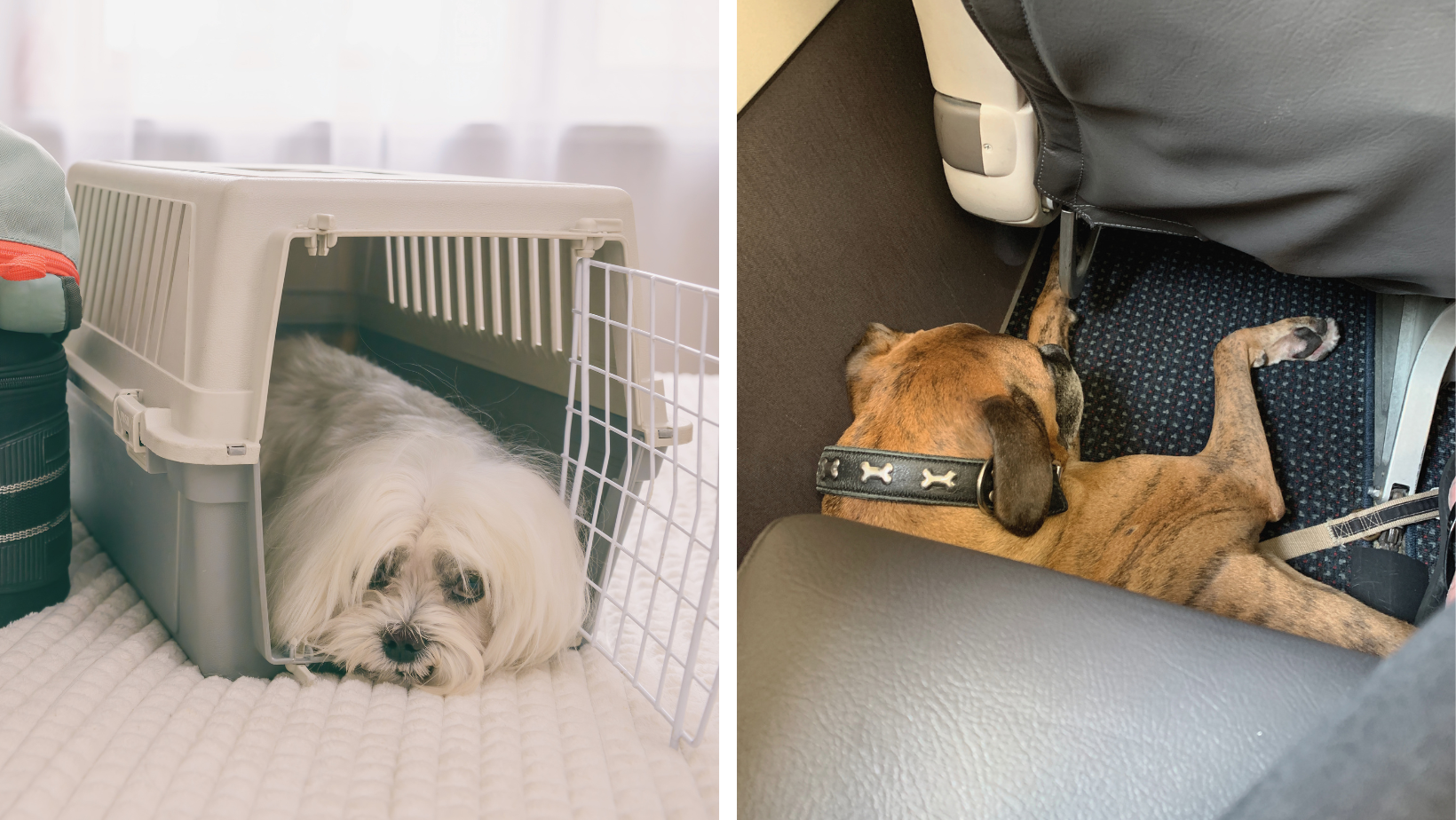
Small dogs can often travel under the seat in front of you, in a carrier that fits airline dimensions. Weight limits vary by airline but usually land somewhere around 15 to 22 pounds including the carrier. Cabin spots are limited per flight, so they book up, and some airlines don't allow in-cabin pets on certain international routes at all.
As manifest cargo
Larger dogs travel in a temperature-controlled, pressurized part of the hold as manifest air cargo, usually booked through the airline's cargo division or a pet shipper. This is also mandatory for some destinations regardless of your dog's size. The UK, for example, does not allow pets to fly in the cabin at all (assistance dogs aside), so every pet dog arrives as cargo.
Checked baggage
This used to be a middle option on some airlines, but it has largely disappeared for international pet travel, so in practice you're usually choosing between cabin and cargo.
One important 2026 note: the airline landscape keeps shifting. Some major US carriers have pulled their general-public cargo pet programs, and others only carry pets through a partner service on eligible routes. That's exactly why you confirm the specific airline and route before you count on anything.
Step 3: Choosing a pet-friendly airline
Not every airline carries pets, and the ones that do have very different rules, so this is worth real research rather than booking on price alone.
The things that actually matter when you compare carriers:
Do they allow pets on your specific route, in the cabin or cargo, in the season you're flying.
Their carrier size and weight limits, which decide whether your dog fits in the cabin.
Breed restrictions, especially for snub-nosed dogs (more on that below).
Temperature embargoes, which can suspend pet travel on hot or cold routes.
Cost, since in-cabin fees, cargo rates, and pet-shipper services vary widely.
I broke down the major carriers and how they stack up in a separate post on airline pet policies. Use it as a starting point, then confirm the current rules directly with the airline, because these policies change often and mid-year.
Step 4: The paperwork you need to fly
Underneath the logistics, most international trips need the same core documents, built in a specific order.
Your dog needs an ISO-compliant microchip first, then a rabies vaccination given after the chip, and then a USDA-endorsed health certificate for your destination. That certificate is examined and completed by a USDA-accredited veterinarian and endorsed by your regional USDA APHIS office, usually within a tight window before travel. I walk through how the health certificate process works start to finish in its own guide.
The order is what trips people up. A rabies shot only counts if the microchip came first, and a primary rabies vaccination usually carries a waiting period before your dog can enter another country. Build the paperwork around your flight date, not the other way around.

Step 5: Book early, and plan around embargoes
Once you know your route, airline, and paperwork timeline, book early. Cabin pet slots and cargo space are both limited, and they fill up, especially in summer.
Speaking of summer: temperature embargoes are one of the biggest reasons pets get pulled from a flight at the last minute. Airlines can refuse to fly a pet based on the forecast temperature at the departure, layover, or arrival airport, and heat embargoes often run from late spring through early fall. If you're flying a hot route in July, that's a real risk to plan around, sometimes by choosing a different routing or time of day.
Step 6: Understand the Safety rules with Snub-nosed breeds and heat
If you have a brachycephalic (snub-nosed) breed, French Bulldog, Pug, Boston Terrier, Bulldog, and similar, this section matters more for you than any other.
Flat-faced dogs have a harder time regulating their breathing and temperature, so many airlines restrict or outright ban them from cargo, and apply stricter temperature limits when they are allowed. Some carriers won't fly them on certain routes at all. If your dog is small enough to fly in the cabin, that's usually the safer path. If not, this is worth planning carefully and, honestly, worth getting help with.
None of this is meant to scare you. It's just the part where the details protect your dog, so they're the details you don't want to wing.
Step 7: How to Get back into the US
People plan the outbound trip in detail and forget the return, but the US has its own entry rules, and they changed recently.
To bring a dog into the United States from a rabies-free or low-risk country (which includes the UK and most of Western Europe), your dog needs to be at least six months old, have a microchip a universal scanner can read, appear healthy on arrival, and have a CDC Dog Import Form receipt. That form is submitted online, and the receipt is valid for six months, so you can use it for the round trip. You can show it printed or on your phone.
Dogs coming back from a high-risk rabies country face extra steps, but for a typical Europe or UK trip, the microchip and the CDC Dog Import Form are the pieces to remember. Sort the return before you leave, not at the airport on the way home.
Cabin vs. cargo at a glance
Here's how the two main options compare. The right one depends on your dog's size and your destination, so read this as a starting point rather than a rule.
The takeaway: if your dog fits the cabin rules and your destination allows it, the cabin is usually simpler and less stressful. Everything else is a cargo trip, which is very doable but needs more planning.
My experience flying with Poppy
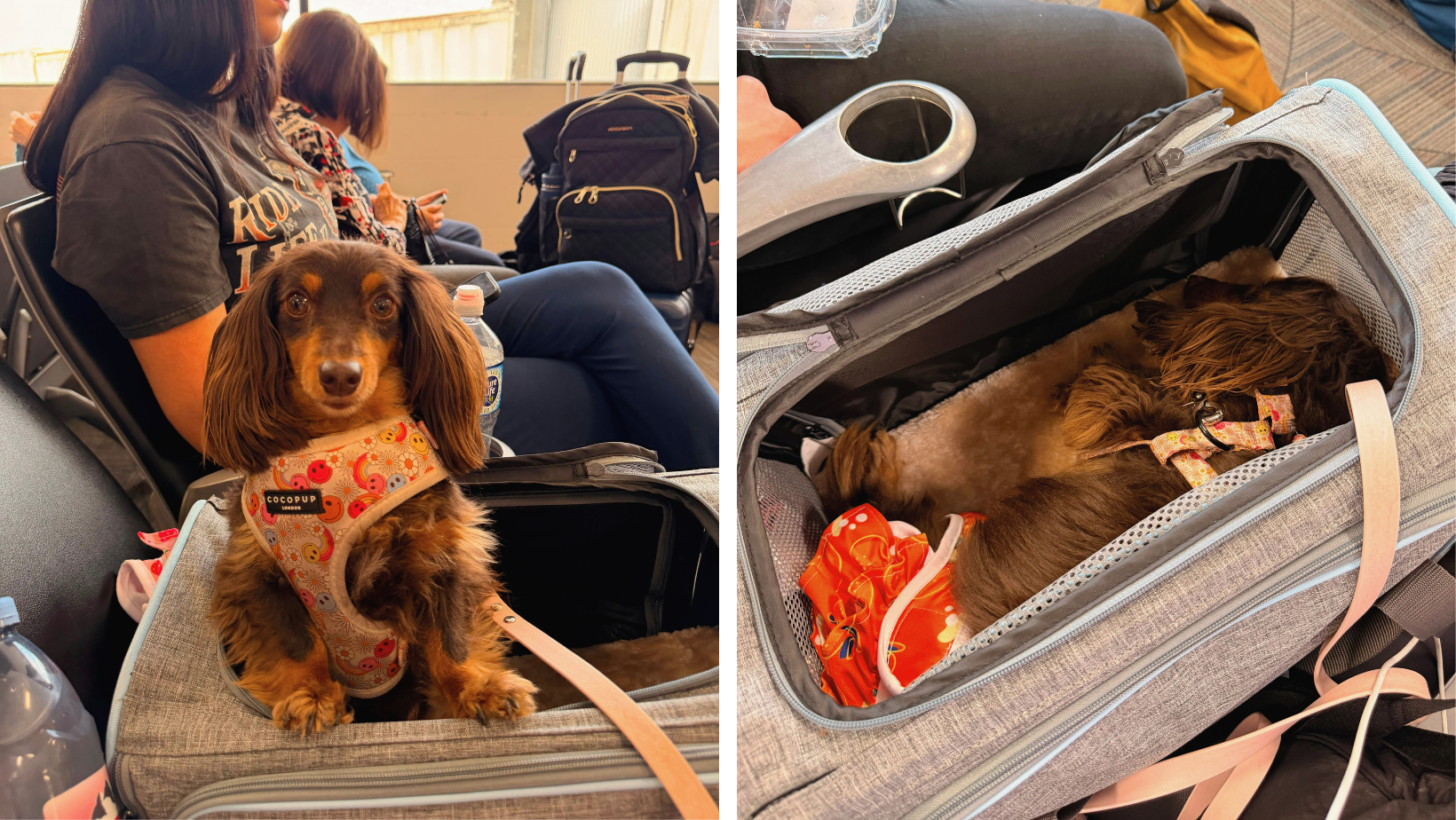
Poppy is a dachshund, small enough to fly in the cabin, which has made most of our trips more relaxed than they'd be with a bigger dog. But I still learned the timing lesson the hard way.
The thing that surprised me first wasn't the paperwork. It was how early the cabin pet slots filled up on the flights I wanted. Airlines cap how many pets travel in the cabin per flight, and on popular routes those spots go fast. Now I book Poppy's spot the moment I book mine, before anything else, and it's saved me from scrambling more than once.
Common mistakes US Pet owners make
Booking the flight before checking the rules. Your destination and your dog's size decide your options. Book those first.
Assuming your dog can fly in the cabin. Weight limits, route bans, and cargo-only destinations like the UK all rule it out in specific cases.
Ignoring temperature embargoes. A hot route in summer can get your pet pulled at the last minute, even with perfect paperwork.
Overlooking snub-nosed breed rules. Flat-faced dogs face cargo bans and stricter limits. Plan around them.
Forgetting the trip home. The US requires a microchip and a CDC Dog Import Form. Handle it before you leave.
Flying With Your Dog Internationally FAQ
-
Sometimes. Small dogs that fit in an airline-approved carrier under the seat can often fly in the cabin, usually up to around 15 to 22 pounds including the carrier, depending on the airline. Larger dogs travel as cargo, and some destinations (like the UK) require cargo for all pets.
-
It varies widely. In-cabin pet fees are typically a few hundred dollars each way, while cargo or pet-shipper services cost significantly more, often well into the thousands for larger dogs or complex routes. Paperwork, vet visits, and the USDA endorsement are separate. It helps to map the full cost early.
-
It depends on your route, your dog's size, and the season, and policies change often. Rather than name a single winner, compare carriers on whether they fly pets on your route, their carrier and weight limits, breed rules, and temperature embargoes. Our airline comparison is a good place to start.
-
At minimum, an ISO-compliant microchip, a rabies vaccination given after the chip, and a USDA-endorsed health certificate for your destination. Specific countries add their own requirements, so confirm your destination's rules early.
-
At least a month for straightforward destinations like the EU, and much longer, sometimes several months, for strict ones like Australia or Hawaii. Booking the flight and the pet slot early matters too, since space is limited.
-
Yes. Your dog needs to be at least six months old, microchipped, healthy on arrival, and have a CDC Dog Import Form receipt (valid six months). Coming from a high-risk rabies country adds more steps.
-
For most dogs, yes, especially in the cabin. Cargo travel is also routine when done with a reputable airline or shipper, though snub-nosed breeds and very hot or cold conditions carry more risk, which is why airlines restrict those situations.
Fly with your dog without the stress
Flying internationally with a dog isn't hard, but it has a lot of moving parts, and they have to line up in the right order. Miss the sequence and you're rebooking flights or scrambling for paperwork at the worst possible time.
If you'd like the whole thing mapped for your exact route and dog, our Guided Travel Prep lays out every step and deadline. And if you'd rather hand the logistics off entirely, from airline booking to paperwork, Full-Service Concierge handles it end to end.
Because your job is to enjoy the trip. Ours is to help you get there.
— Mia + Poppy 🐾
